Pawan Dokhe
Aeronautical engineer. Head – Space & Defence at Premier Cercle, a Brussels-based strategic advisory firm focused on aerospace, defence and security.
Based in Toulouse, France.
About
Aeronautical engineer. Space and defence business developer with 6+ years across B2B and institutional markets, working with ESA, EDF-adjacent programmes, CNES, defence ministries, NATO affiliates and aerospace primes.
Head – Space & Defence at Premier Cercle since August 2025.
Represents Premier Cercle at Eurosatory, the European Space Conference and the NATO Space CoE.
Selected for Lunar Colony Crew 1 at AATC, Krakow, as EVA specialist.
Education
MSc in Aerospace Management: TBS Education, ISAE-SUPAERO, University of Luxembourg. Includes the UNIVERSEH module “Space Innovation, Business & Law”, plus Strategic Management and International Finance.
Postgraduate Diploma in International Business Operations.
B.Tech in Aeronautical Engineering.
BSc in Mathematics, Statistics & Computer Science.
Postgraduate Certificate in Climate Change & Sustainability.
Languages
English (proficient)
French (B1)
Hindi (fluent)
Portfolio
Coverage and proceedings
Toulouse
28–29 April 2026
2nd NATO Space COE Conference
Covered the conference and wrote its shorter proceedings, including panel summaries, in collaboration with the NATO Space CoE.
Moderator
NATO S&T Trends 2025–2045
Moderated a conference and prepared briefing documents around the report.
Organiser
Eurosatory 2026
Tuesday 16 June 2026
12:00–13:00
Eurosatory 2026 mainstage panel
“L’innovation au service des forces : des communications critiques à la bulle tactique”
Hall 5A Mainstage, Parc des Expositions de Paris Nord Villepinte. Eurosatory ran 15–19 June 2026.
Panellists: Nassima Auvray, Directrice Défense et Sécurité, Orange Business. Général de corps d’armée Philippe de Montenon, Armée de Terre. Lyse Brillouet, VP Research & Development, Orange. Steen Søndergaard, NATO Chief Scientist.
Finance Manager
Conference logistics
SG France 2026
TBS-UNIVERSEH Space Conference, 3rd edition, France 2030 initiative. Managed conference logistics.
Finance Manager
Helsinki, Finland
18–19 January 2027
E-SGW 2027, the 11th European Space Generation Workshop
Organised by the Space Generation Advisory Council (SGAC).
Theme: “Space for a Resilient Europe: Securing Connectivity, Sustainability, and Strategic Autonomy in Space”.
Services
- Strategic consulting
- Market intelligence
- Space cybersecurity
- Business development & operations
- Space & defence business development
- Proposals and tender tracking
- ESA, EDF and institutional funding programmes
- Consortium building and strategic partnerships
- New markets and applications
- Pipeline, CRM and sales forecasting
Domains: SATCOM, Earth observation, defence, lunar analog missions, CubeSat mission design and AIT
Experience
Aug 2025 – present
Head – Space & Defence
Premier Cercle
Brussels / Toulouse
Jun – Dec 2024
Business Intelligence & Market Analyst
CyberInFlight
Toulouse
Built a $2M+ pipeline with European satellite operators, with relationships across 25+ decision-makers at operators, agencies (CNES, ESA) and NewSpace ventures. Competitive analysis of 50+ aerospace companies. 20+ intelligence reports. Coordinated technical, legal and commercial teams on a SATCOM project.
Jan – Aug 2024
Strategy Consultant
Airbus Sesame Consulting
Toulouse
Analysed communication processes across five locations and supported standardisation that shortened project delivery timelines by weeks.
Nov 2016 – Nov 2021
Business & Sales Development Executive
KPW Services Ltd
Hyderabad, India
Oversaw 50+ sales cycles from prospecting to contract closure.
- Bid Lead, IAC 2030: led support-building across national space agencies and international institutions.
- Finance Manager, E-SGW 2027 and SG France 2026.
- European Representative – France, UNIVERSEH: organised international conferences with 100–200 participants each.
- Event budgets managed: €20K–€50K.
Space Cybersecurity
Space Cybersecurity Monthly Watch
October 2024. Monthly RISC Score & Highlights, Weekly Observations, Expert Analysis, Monthly Articles.
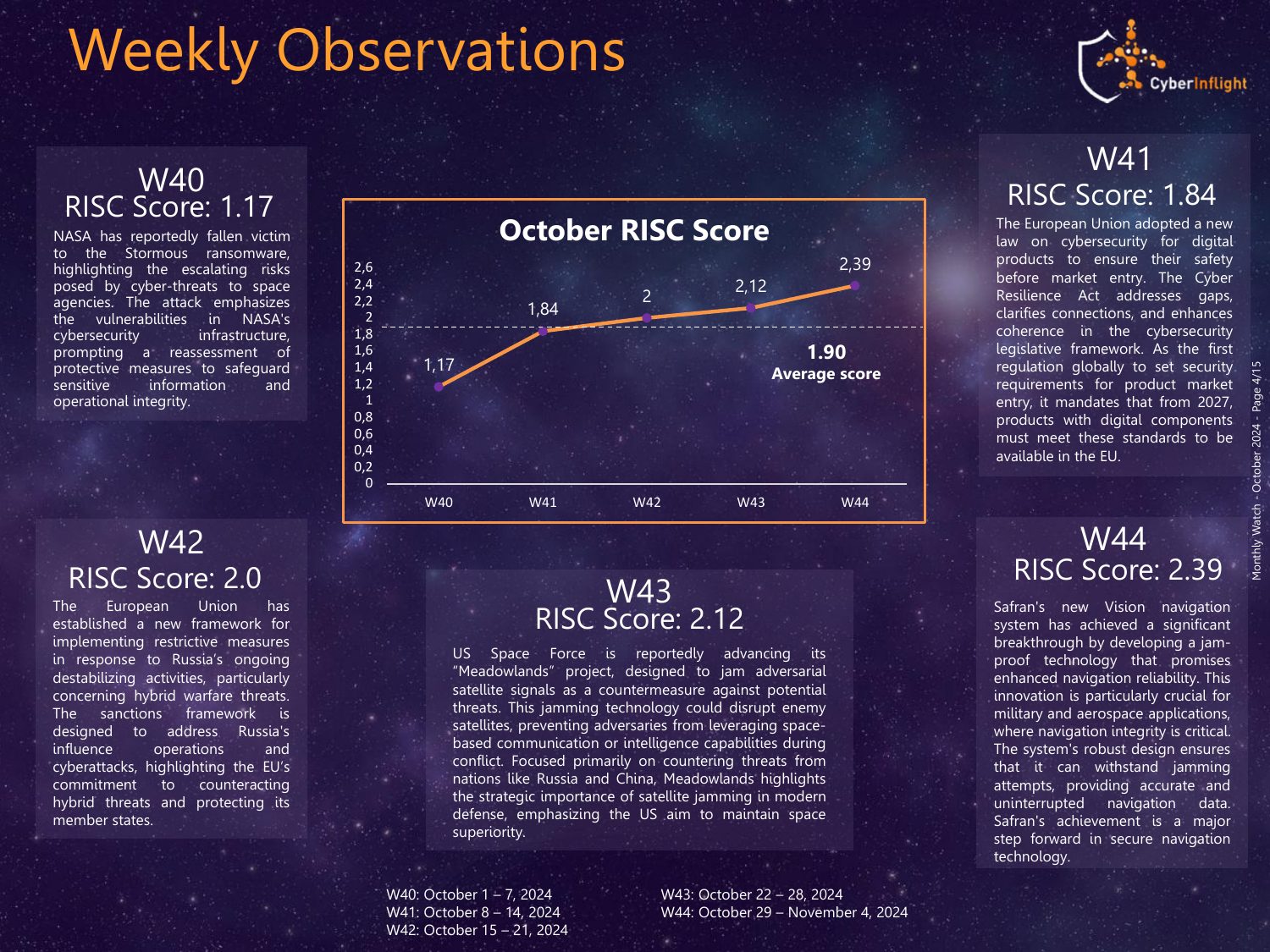
The average October RISC score was 1.90.
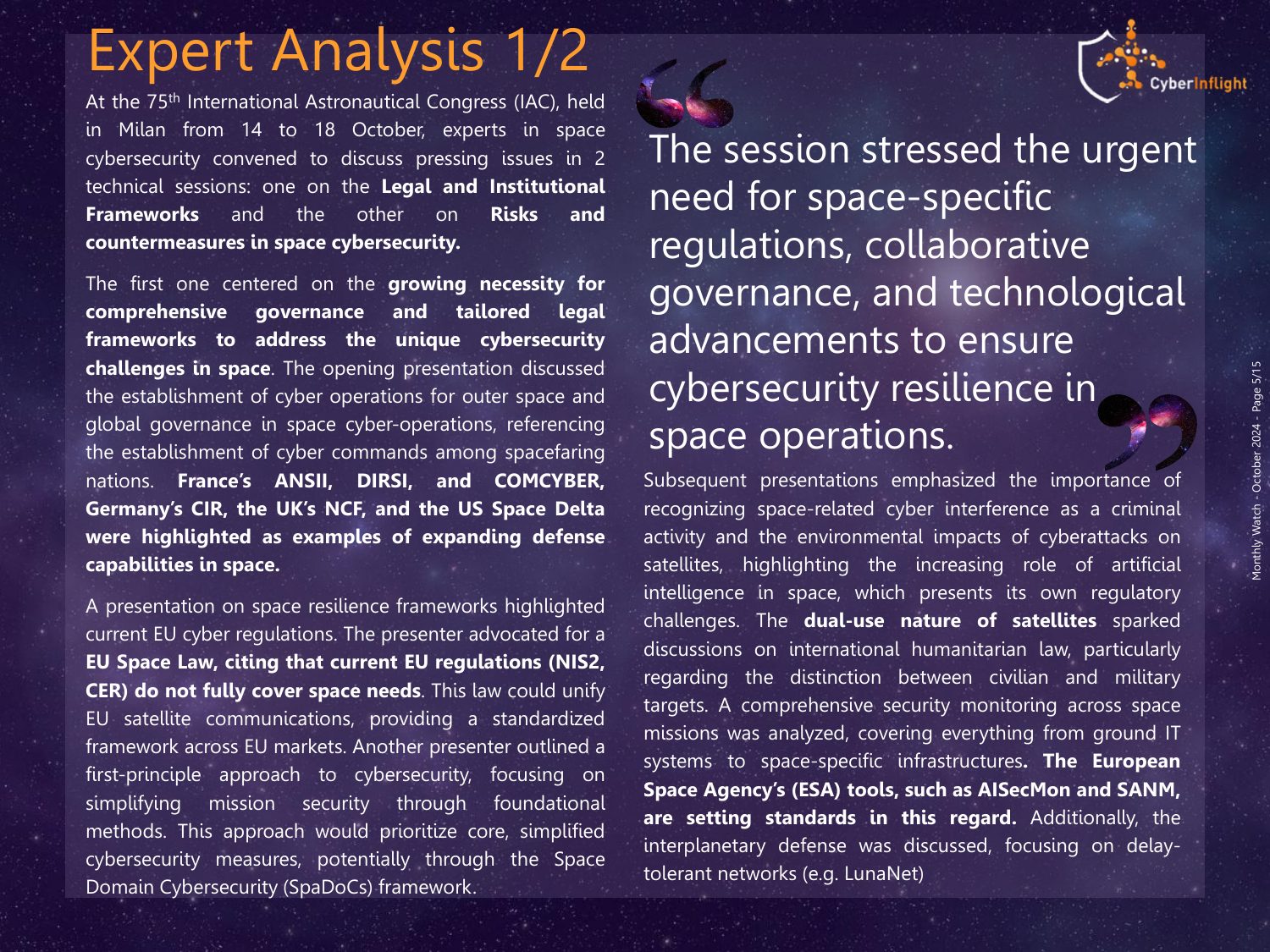
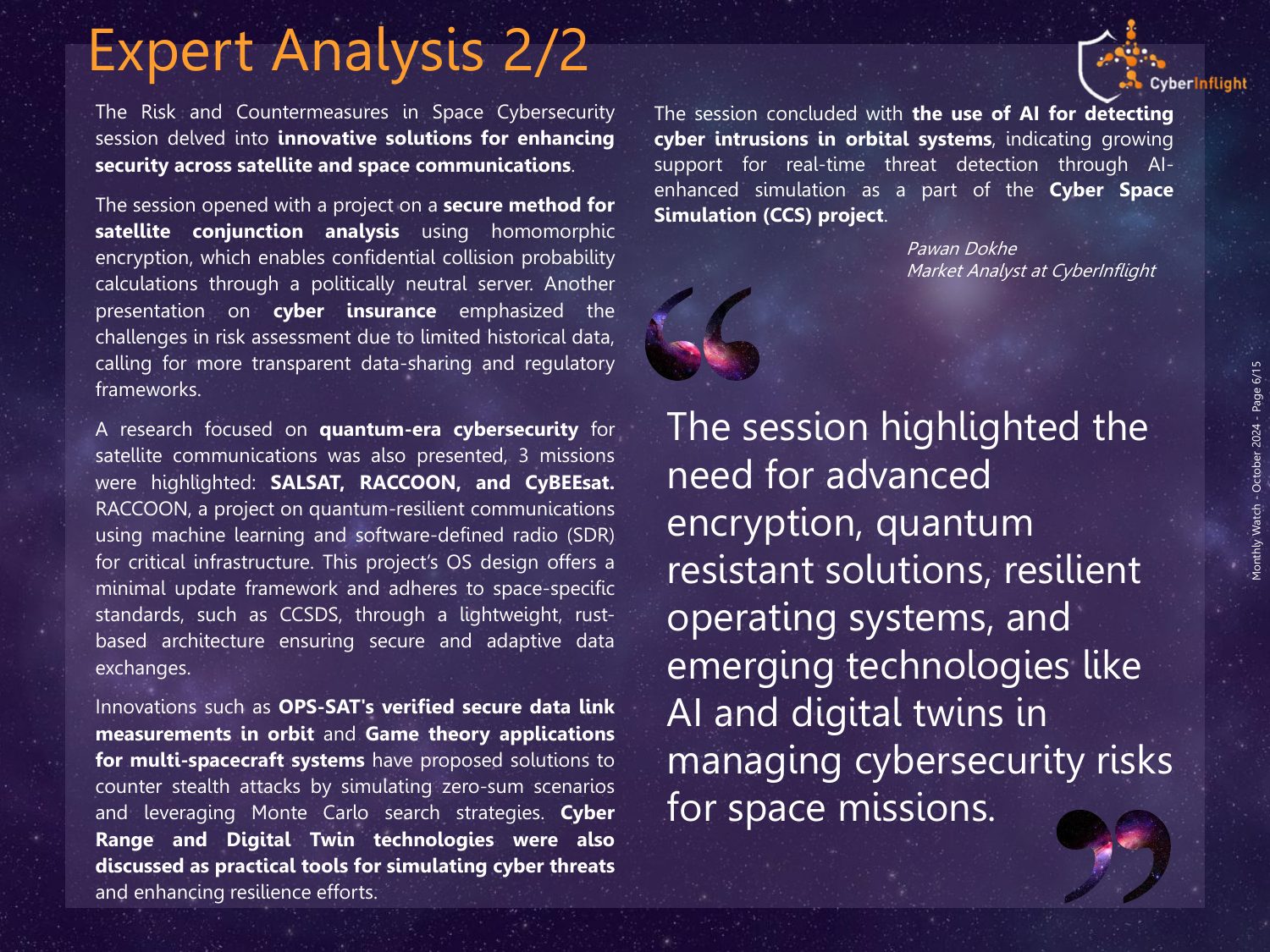
The Expert Analysis pages cover the 75th International Astronautical Congress (IAC) in Milan, 14 to 18 October, and carry the byline Pawan Dokhe, Market Analyst at CyberInflight.
Copyright © 2024 CyberInflight - All rights reserved.
Space Cybersecurity Weekly Watch
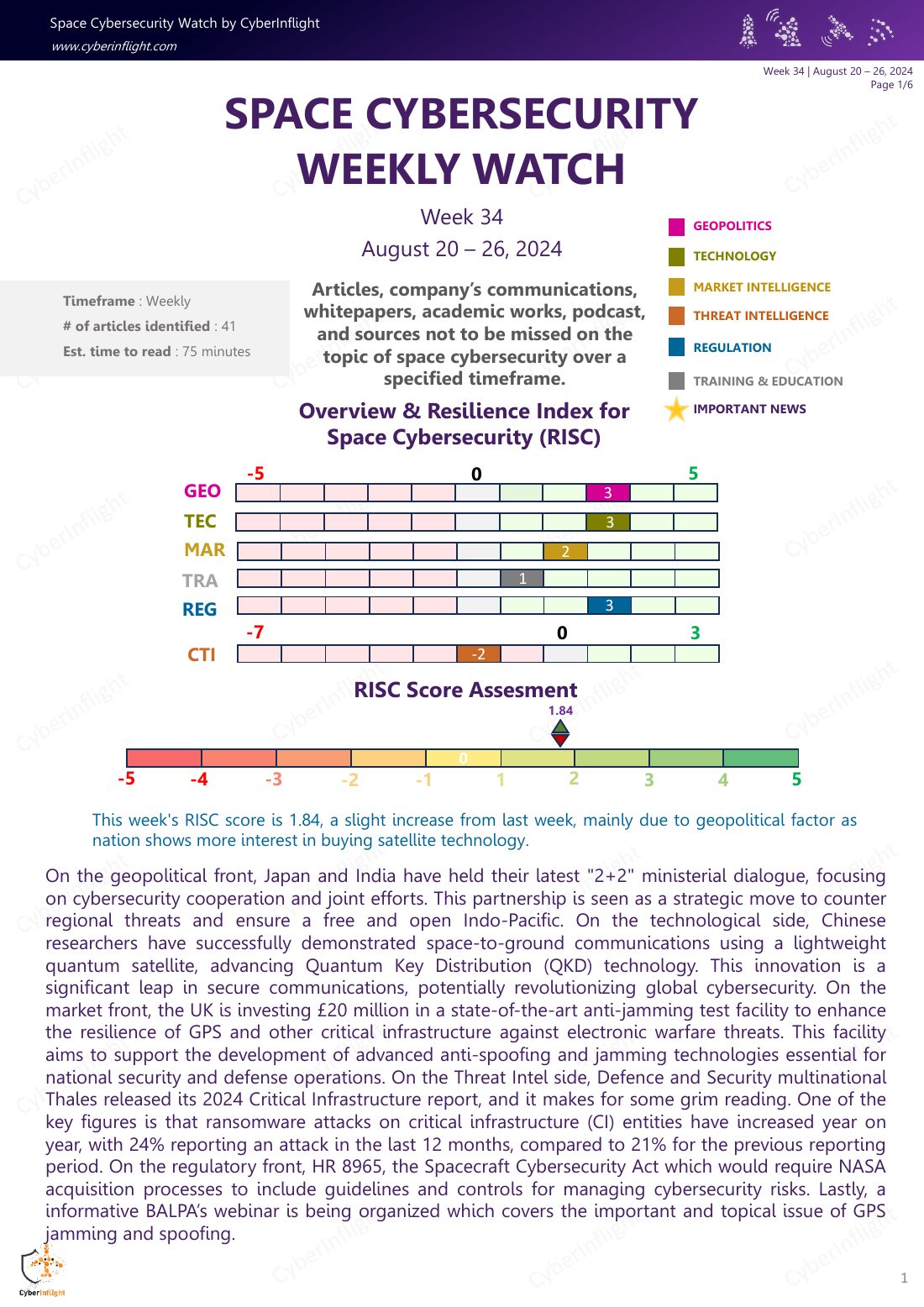
Week 34, August 20 – 26, 2024. Articles, company communications, whitepapers, academic works, podcast and sources not to be missed on the topic of space cybersecurity over a specified timeframe.
Timeframe: weekly. Articles identified: 41. Estimated time to read: 75 minutes.
The Week 34 RISC score was 1.84.
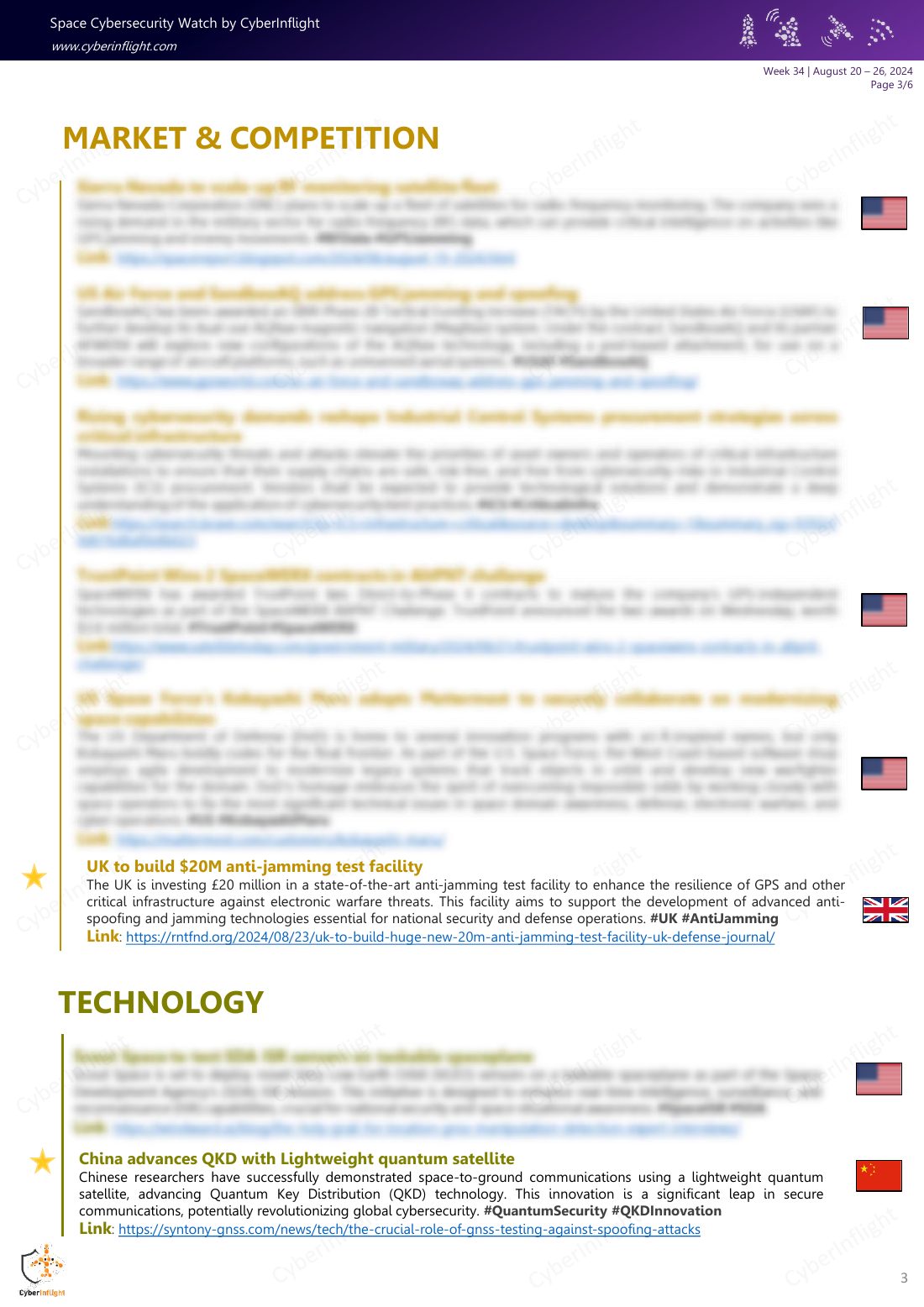
Space Cybersecurity Watch by CyberInflight. www.cyberinflight.com
Indian Space Cybersecurity
Market Intelligence Report. 1st Edition. Published: November 2025.
Copyright © 2023 CyberInflight - All rights reserved.
Threat landscape
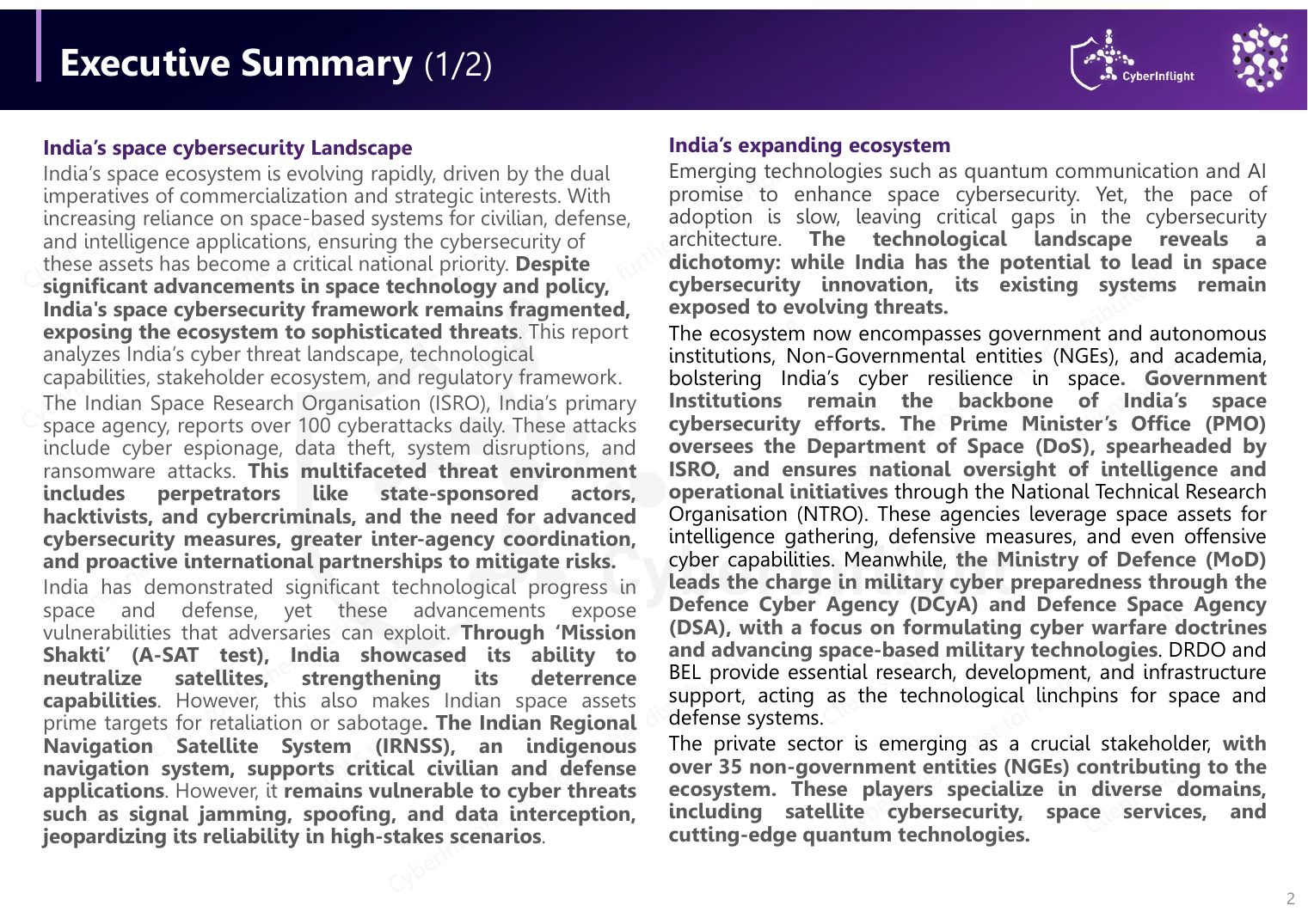
ISRO reports over 100 cyberattacks daily, from state-sponsored actors, hacktivists and cybercriminals. The report finds that India’s space cybersecurity framework remains fragmented despite advances in space technology and policy.
Technology
Mission Shakti, the A-SAT test, strengthens deterrence but makes Indian space assets prime targets for retaliation or sabotage. The IRNSS supports civilian and defence use but remains vulnerable to jamming, spoofing and data interception. Quantum communication and AI promise gains, but adoption is slow.
Stakeholders
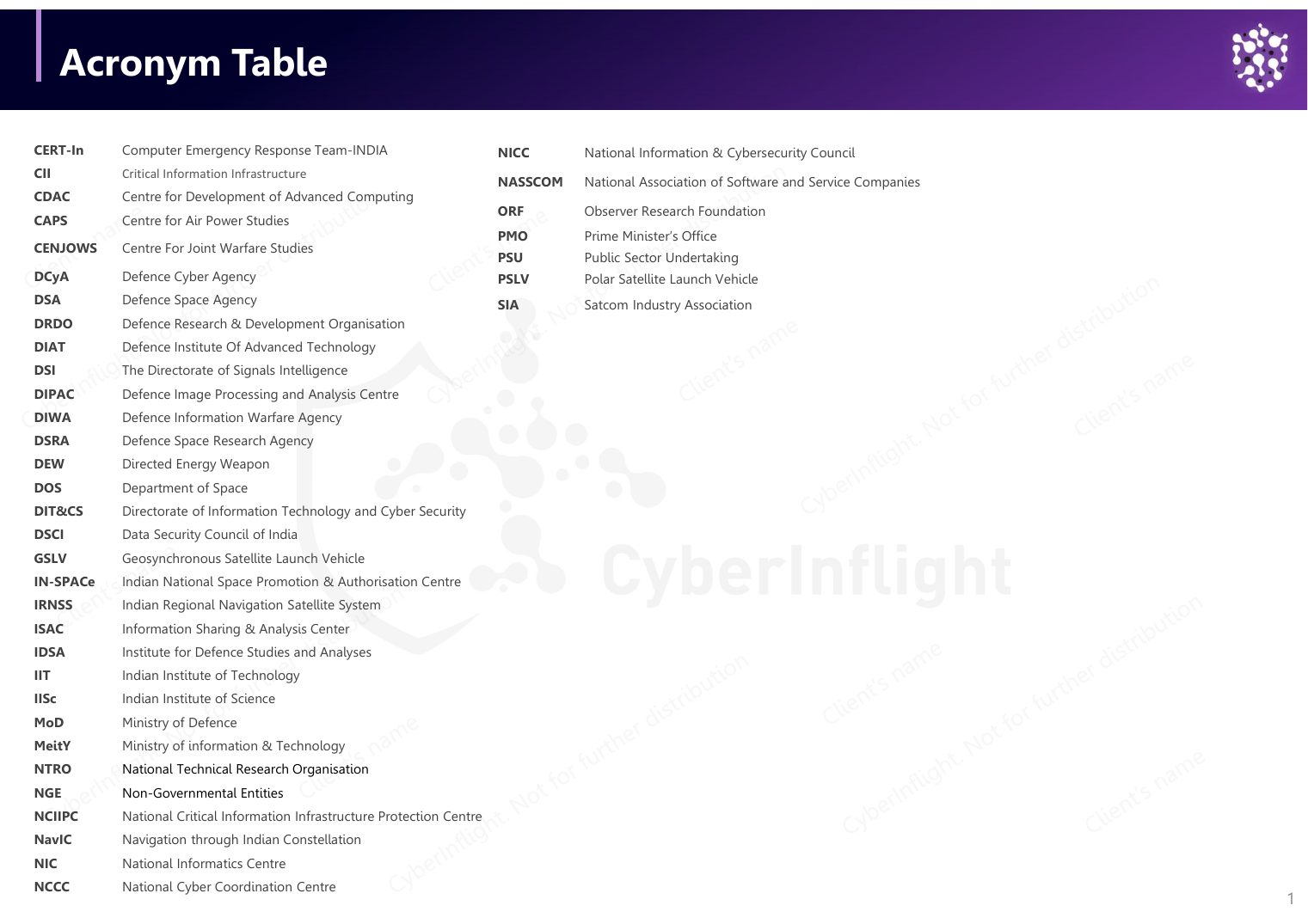
Government institutions remain the backbone: the PMO, the Department of Space and ISRO, NTRO, and the Ministry of Defence through DCyA and DSA, supported by DRDO and BEL. Over 35 non-government entities now contribute across satellite cybersecurity, space services and quantum technologies. The report points to a lack of centralised coordination.
Regulation
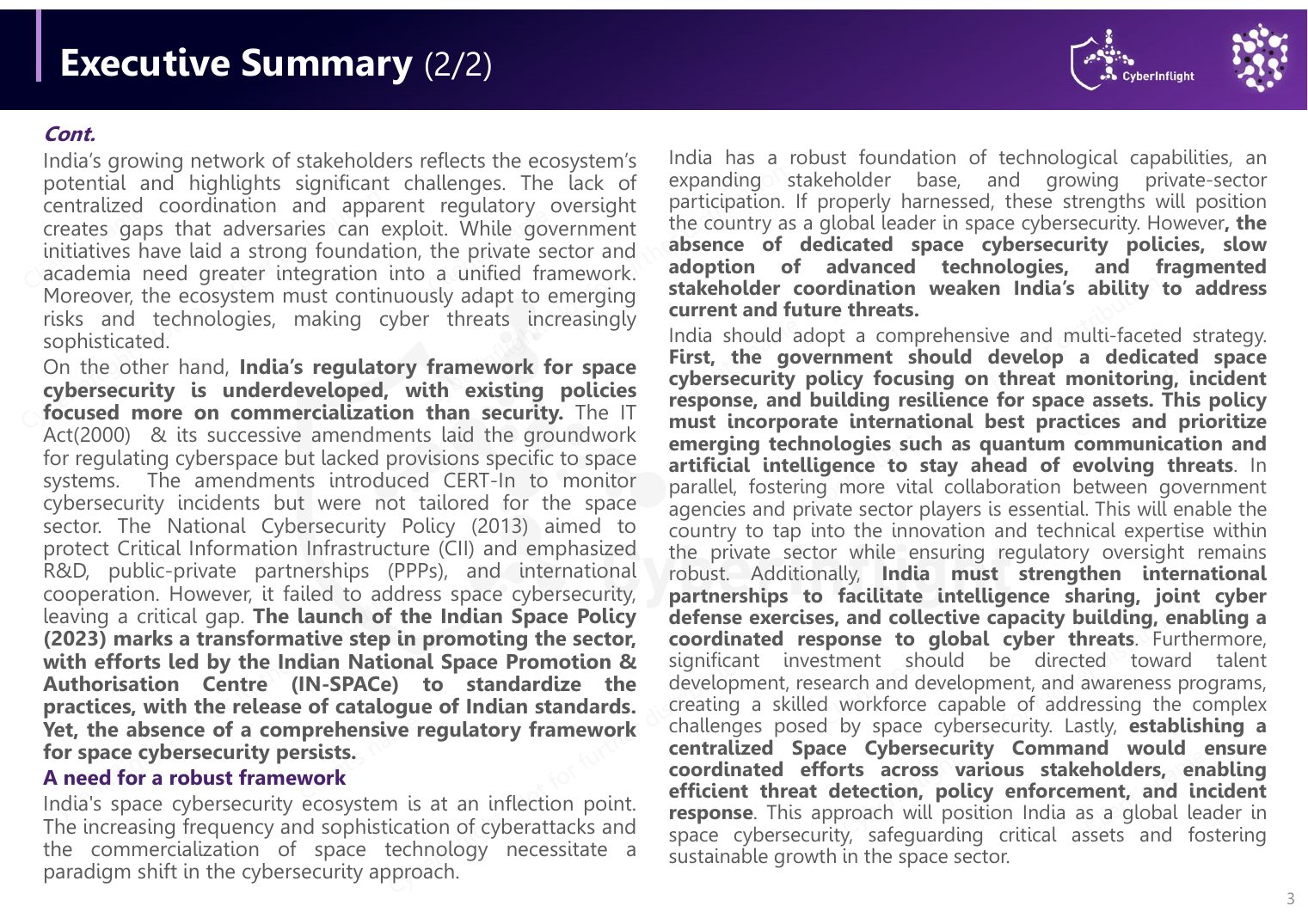
The framework is underdeveloped and focused more on commercialisation than security. The IT Act (2000), the National Cybersecurity Policy (2013) and the Indian Space Policy (2023) lack space-specific cybersecurity provisions. IN-SPACe has released a catalogue of Indian standards.
Recommendations
A dedicated space cybersecurity policy. Stronger collaboration between government and the private sector. Stronger international partnerships. Investment in talent, R&D and awareness. A centralised Space Cybersecurity Command.
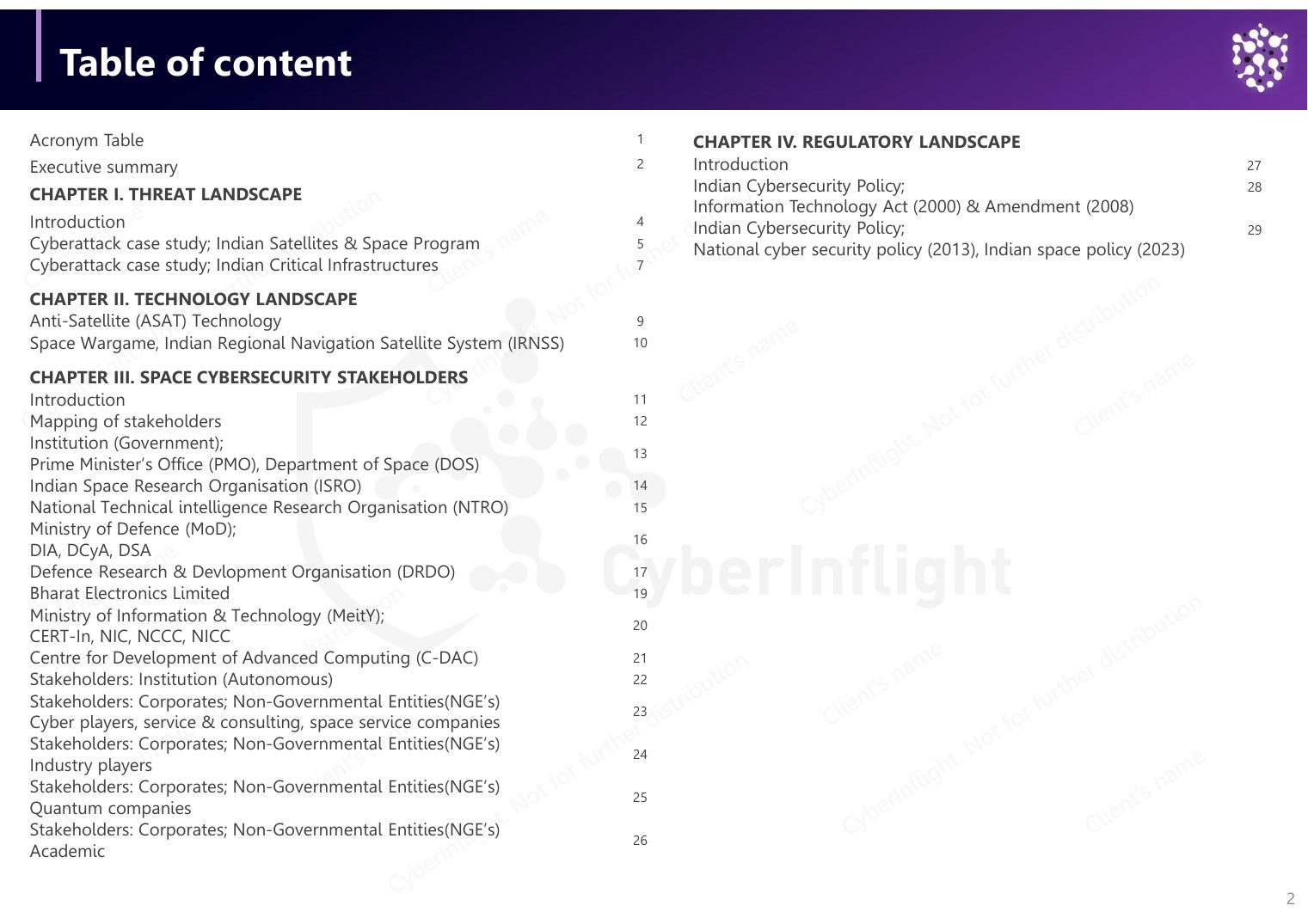
- Threat landscape
- Technology landscape
- Space cybersecurity stakeholders
- Regulatory landscape
UNIVERSEH

European Representative – France for UNIVERSEH, representing TBS Education.
Designed the UNIVERSEH student club logo, which was adopted across the European partner universities and the student council.
Organises the UNIVERSEH space conference every year with the Toulouse student local team, connecting students, researchers and industry leaders. Conferences organised with 100–200 participants each.
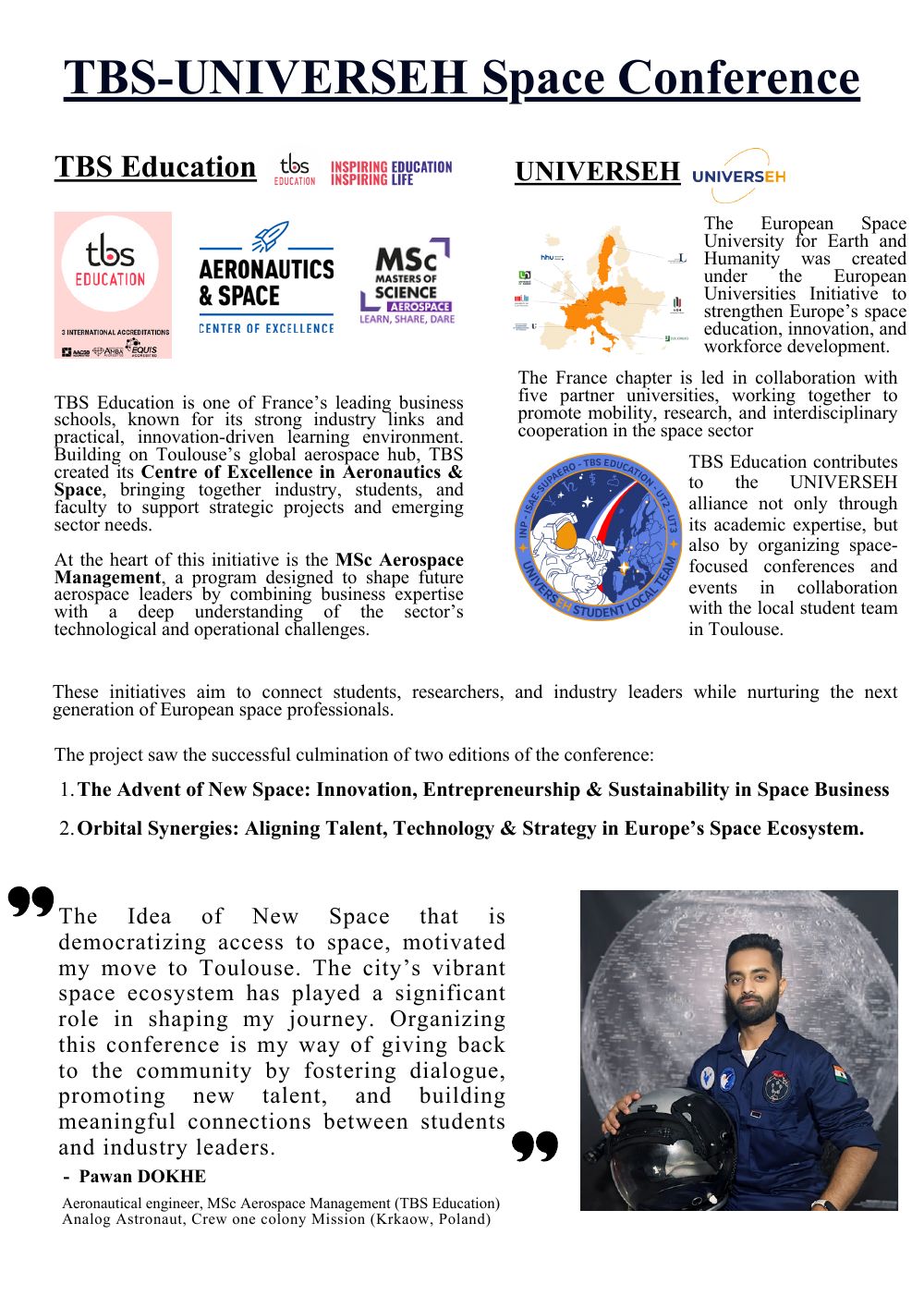
UNIVERSEH, the European Space University for Earth and Humanity, was created under the European Universities Initiative to strengthen Europe’s space education, innovation and workforce development. The France chapter is led in collaboration with five partner universities, working together to promote mobility, research and interdisciplinary cooperation in the space sector.
TBS Education contributes through its academic expertise and by organising space-focused conferences and events with the local student team in Toulouse. It created its Centre of Excellence in Aeronautics & Space, bringing together industry, students and faculty, with the MSc Aerospace Management at its heart.
“The Idea of New Space that is democratizing access to space, motivated my move to Toulouse. The city’s vibrant space ecosystem has played a significant role in shaping my journey. Organizing this conference is my way of giving back to the community by fostering dialogue, promoting new talent, and building meaningful connections between students and industry leaders.” Pawan Dokhe
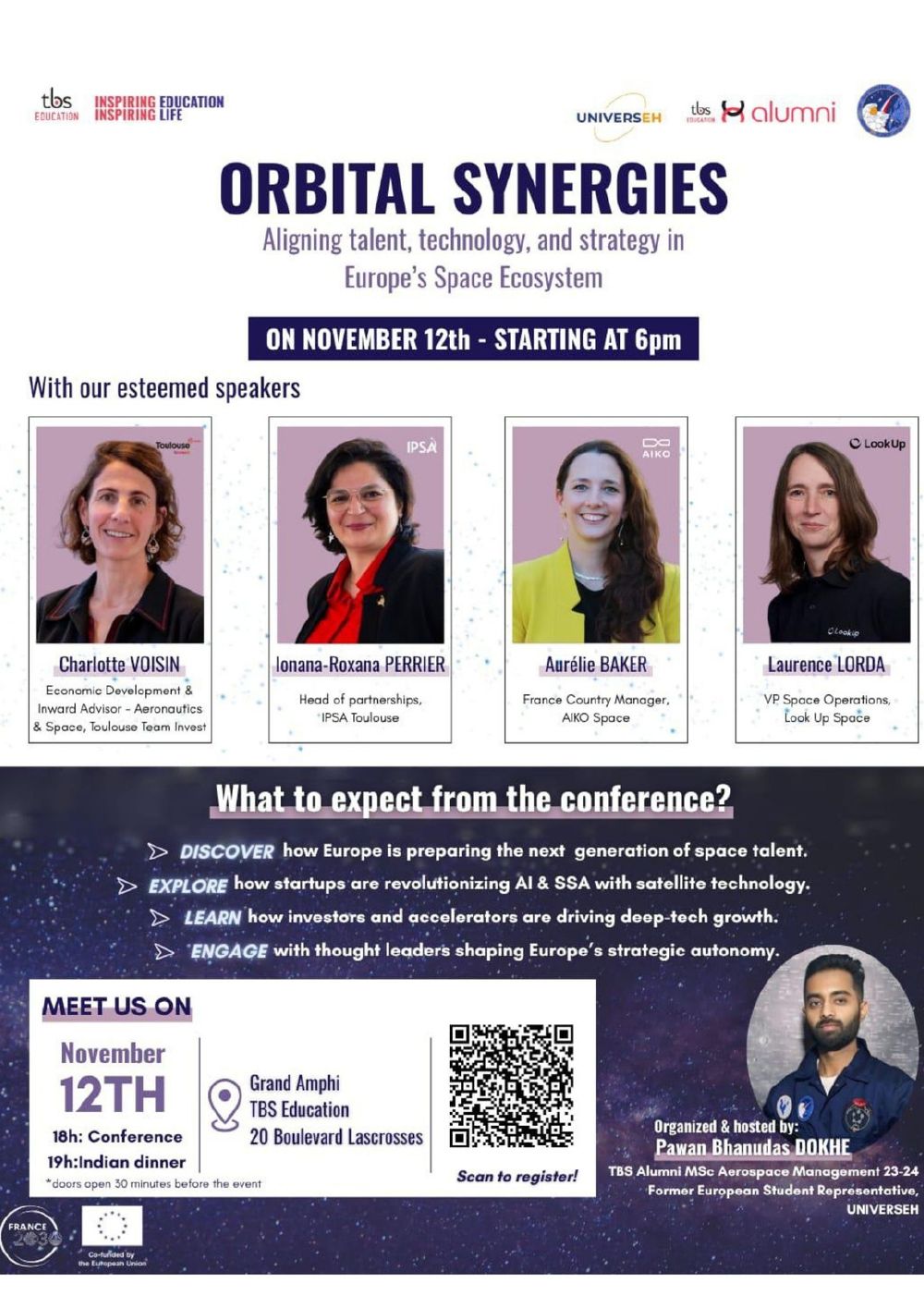
12 November
18:00 conference
19:00 Indian dinner
Grand Amphi, TBS Education, 20 Boulevard Lascrosses
Orbital Synergies
Aligning talent, technology and strategy in Europe’s space ecosystem.
Organised and hosted by Pawan Dokhe.
Speakers: Charlotte Voisin, Economic Development & Inward Advisor – Aeronautics & Space, Toulouse Team Invest. Ionana-Roxana Perrier, Head of partnerships, IPSA Toulouse. Aurélie Baker, France Country Manager, AIKO Space. Laurence Lorda, VP Space Operations, Look Up Space.
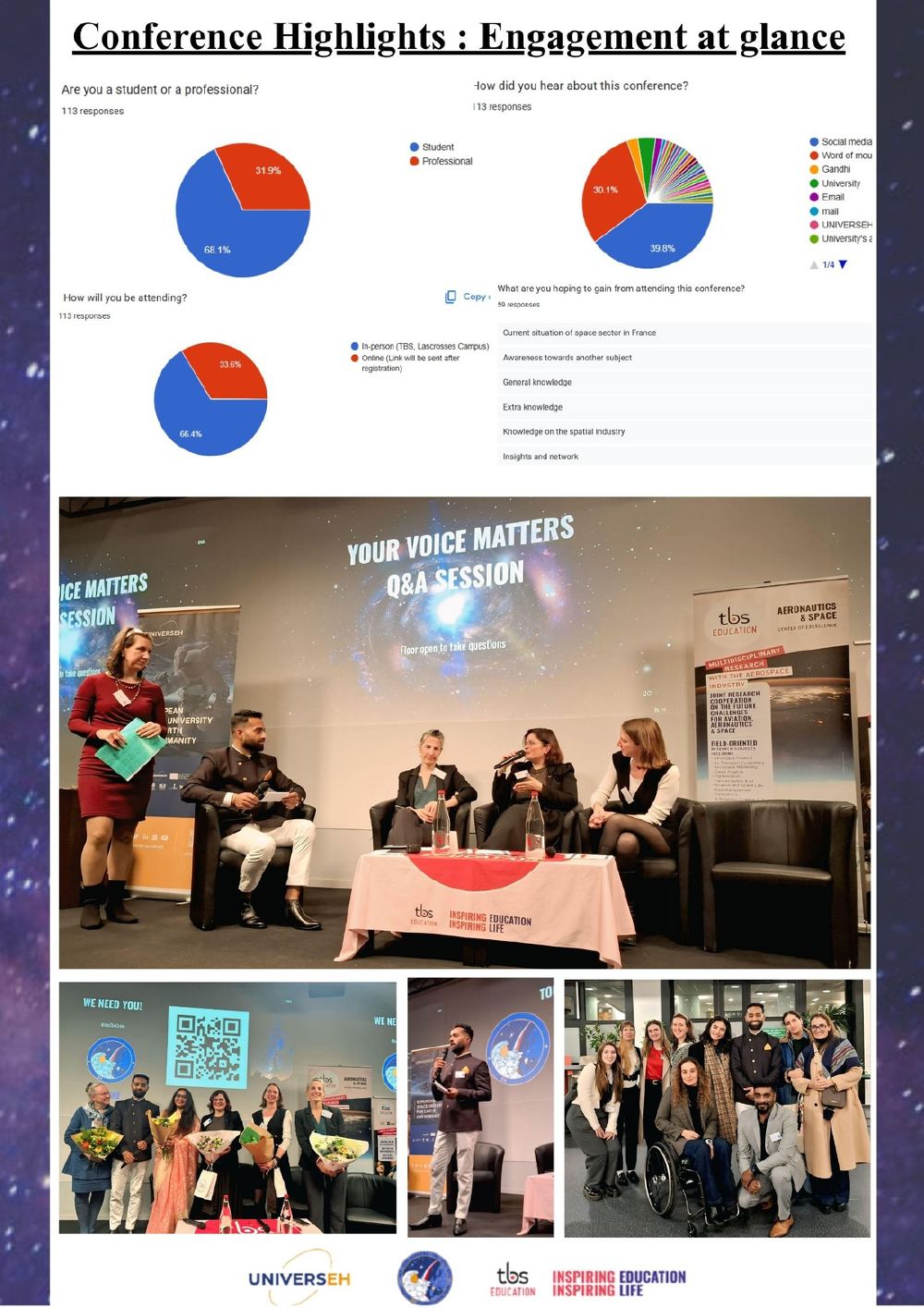
Survey of 113 responses: 68.1% students and 31.9% professionals; 66.4% attending in person and 33.6% online.
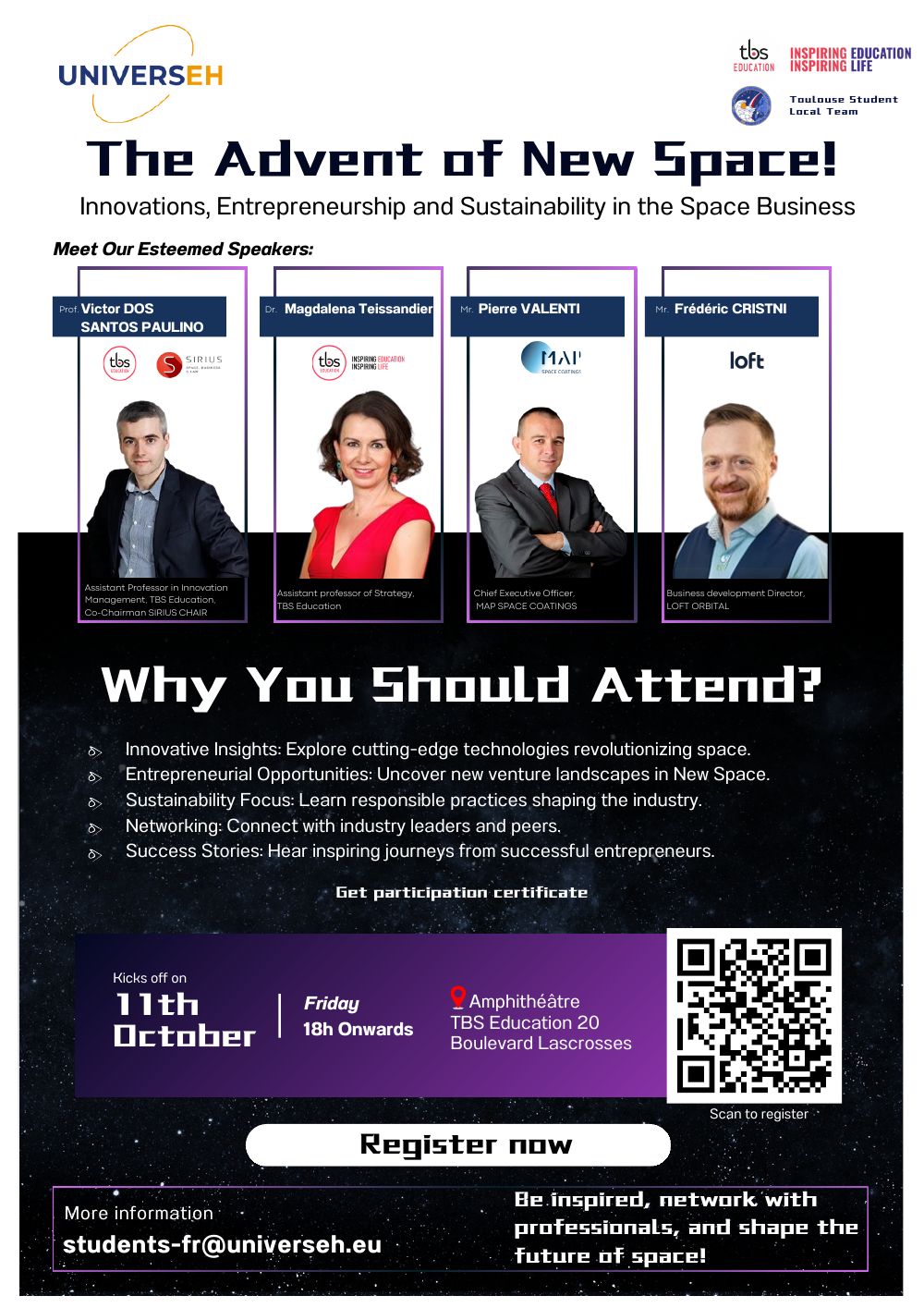
11 October
Friday, from 18:00
Amphithéâtre, TBS Education, 20 Boulevard Lascrosses
The Advent of New Space!
Innovations, Entrepreneurship and Sustainability in the Space Business.
Organised with the UNIVERSEH Toulouse Student Local Team.
Speakers: Victor Dos Santos Paulino, Assistant Professor in Innovation Management, TBS Education, Co-Chairman SIRIUS CHAIR. Magdalena Teissandier, Assistant professor of Strategy, TBS Education. Pierre Valenti, Chief Executive Officer, MAP Space Coatings. Frédéric Cristni, Business development Director, Loft Orbital.
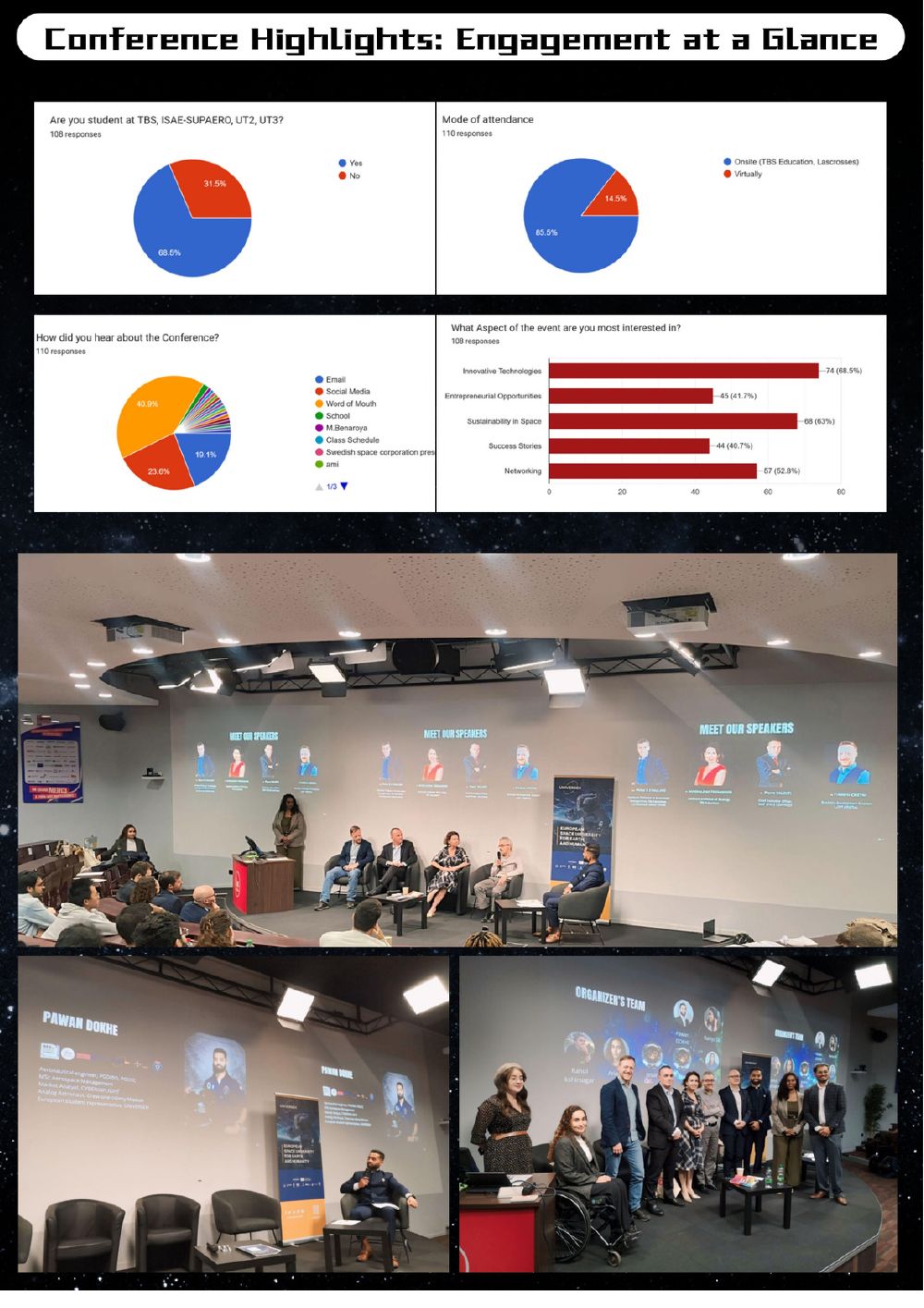
Survey responses: 68.5% of 108 were students of TBS, ISAE-SUPAERO, UT2 or UT3; of 110, 85.5% attended onsite and 14.5% virtually.
SGAC
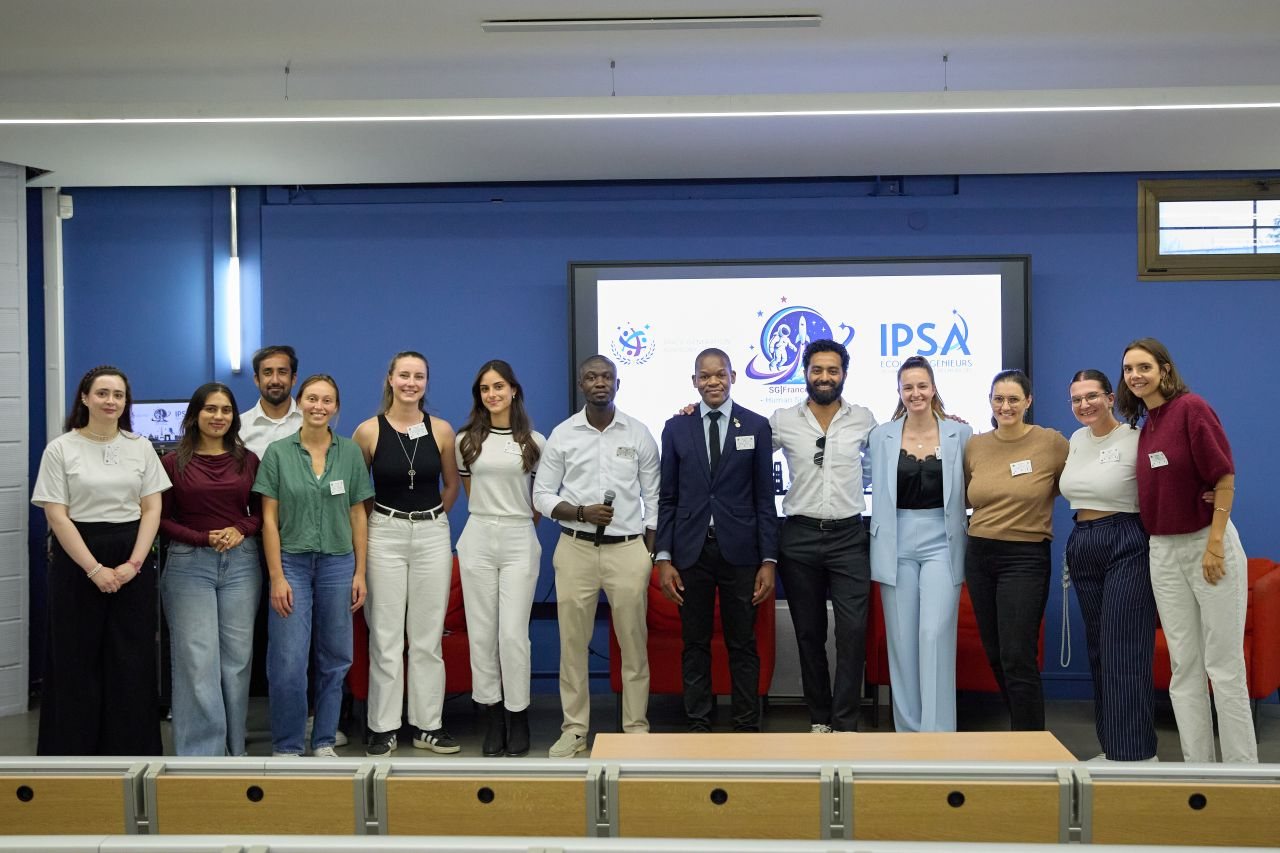
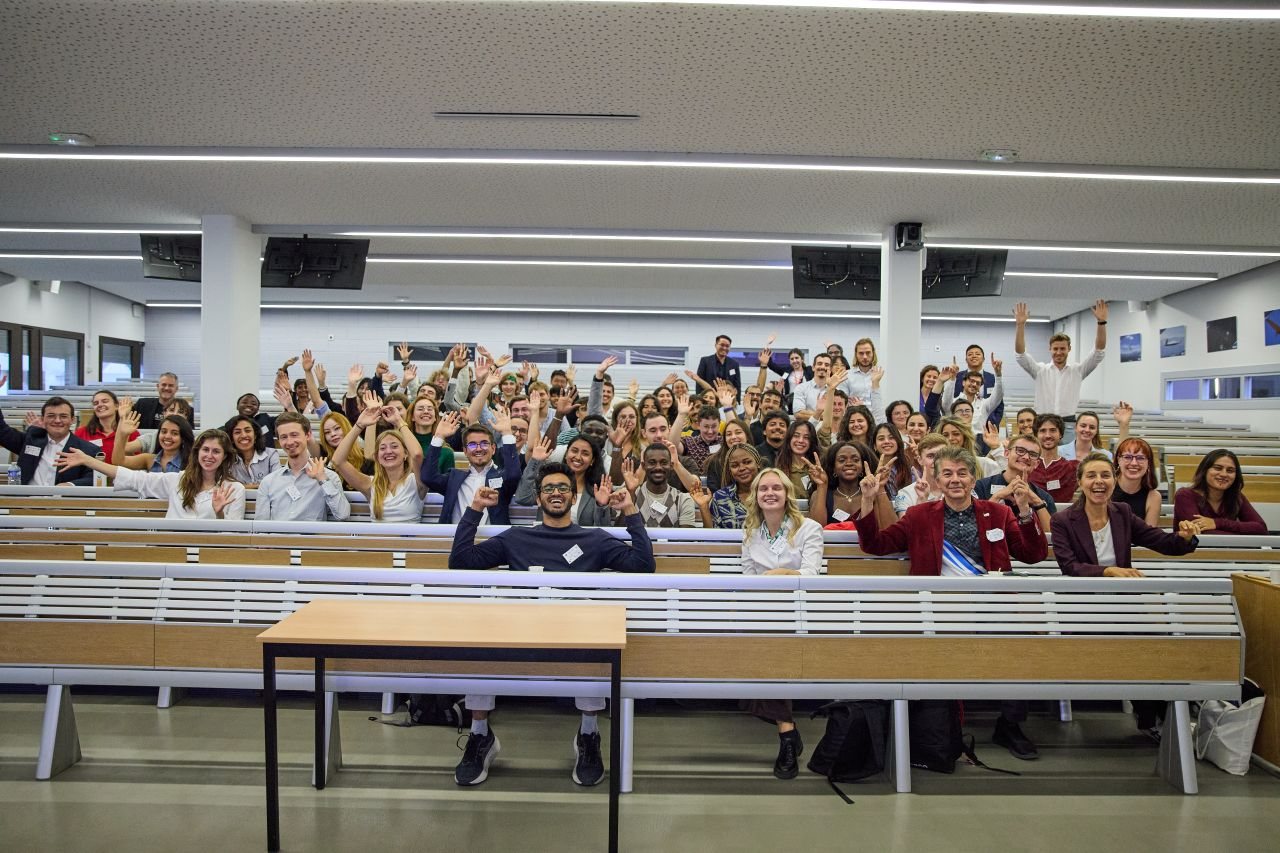
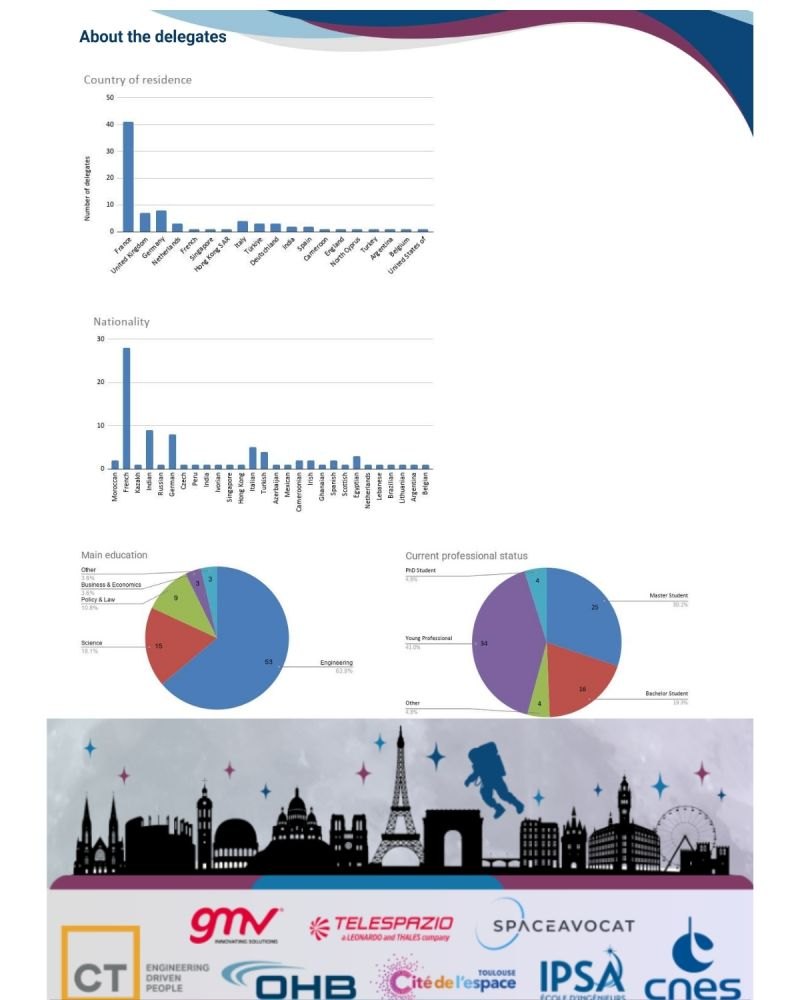
Space Generation Advisory Council conferences. Finance Manager for SG France 2026 and E-SGW 2027.

SG[France]2026 – Human Spaceflight
Paris. Role: Finance Manager.
E-SGW 2027
The 11th European Space Generation Workshop, organised by the Space Generation Advisory Council (SGAC).
18–19 January 2027, Helsinki, Finland.
Theme: “Space for a Resilient Europe: Securing Connectivity, Sustainability, and Strategic Autonomy in Space”.
Role: Finance Manager.
Publications
Springer Aerospace Technology
“Design of the Largest in the World Space Simulation – Lunar Analog COLONY 1.”
KGK 2024 selected proceedings of the 7th Space Resources Conference (Kraków, 23–24 May 2024). Pawan is one of several co-authors; the first author is Agata Maria Kołodziejczyk.
IAC 2025
Interactive presentation
“Study of Stellar Activity and Stellar Cycle of M-Dwarf Host Stars Using K2 and TESS Observations.”
76th International Astronautical Congress, IAF Symposium on Future Space Astronomy and Space Physics. Affiliation listed: TBS Education, Toulouse School of Management.
Moderation, organisation and coverage
Moderation of the NATO S&T Trends 2025–2045 conference and organisation of the Eurosatory 2026 mainstage panel. Coverage of the NATO Space CoE 2026 conference, with the shorter proceedings written in collaboration with the NATO Space CoE.
NATO Engagement
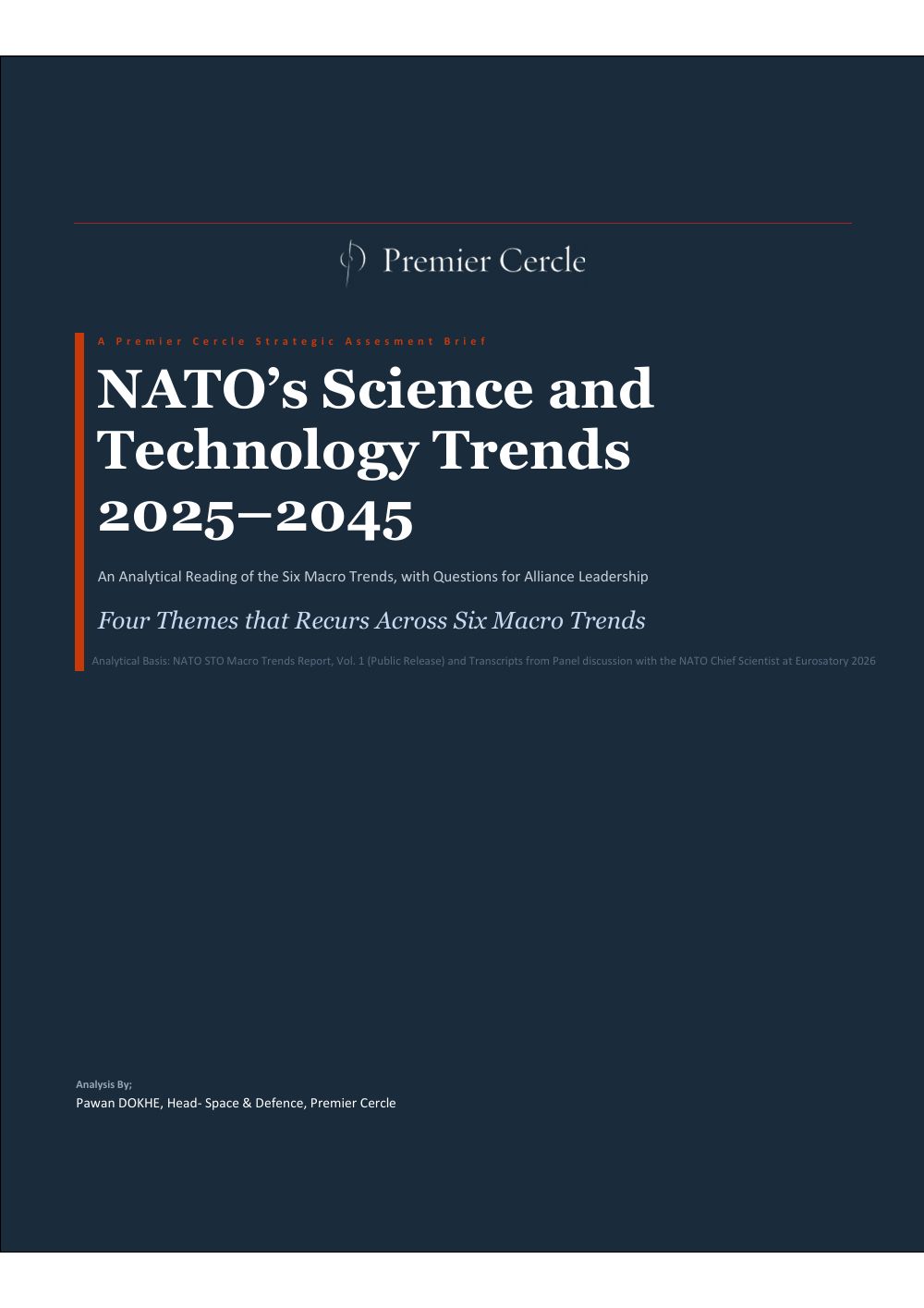
NATO S&T Trends 2025–2045
A Premier Cercle strategic assessment brief: an analytical reading of the six macro trends, with questions for Alliance leadership.
Analysis by Pawan Dokhe, Head – Space & Defence, Premier Cercle.
Analytical basis: NATO STO Macro Trends Report, Vol. 1 (Public Release) and transcripts from the panel discussion with the NATO Chief Scientist at Eurosatory 2026.
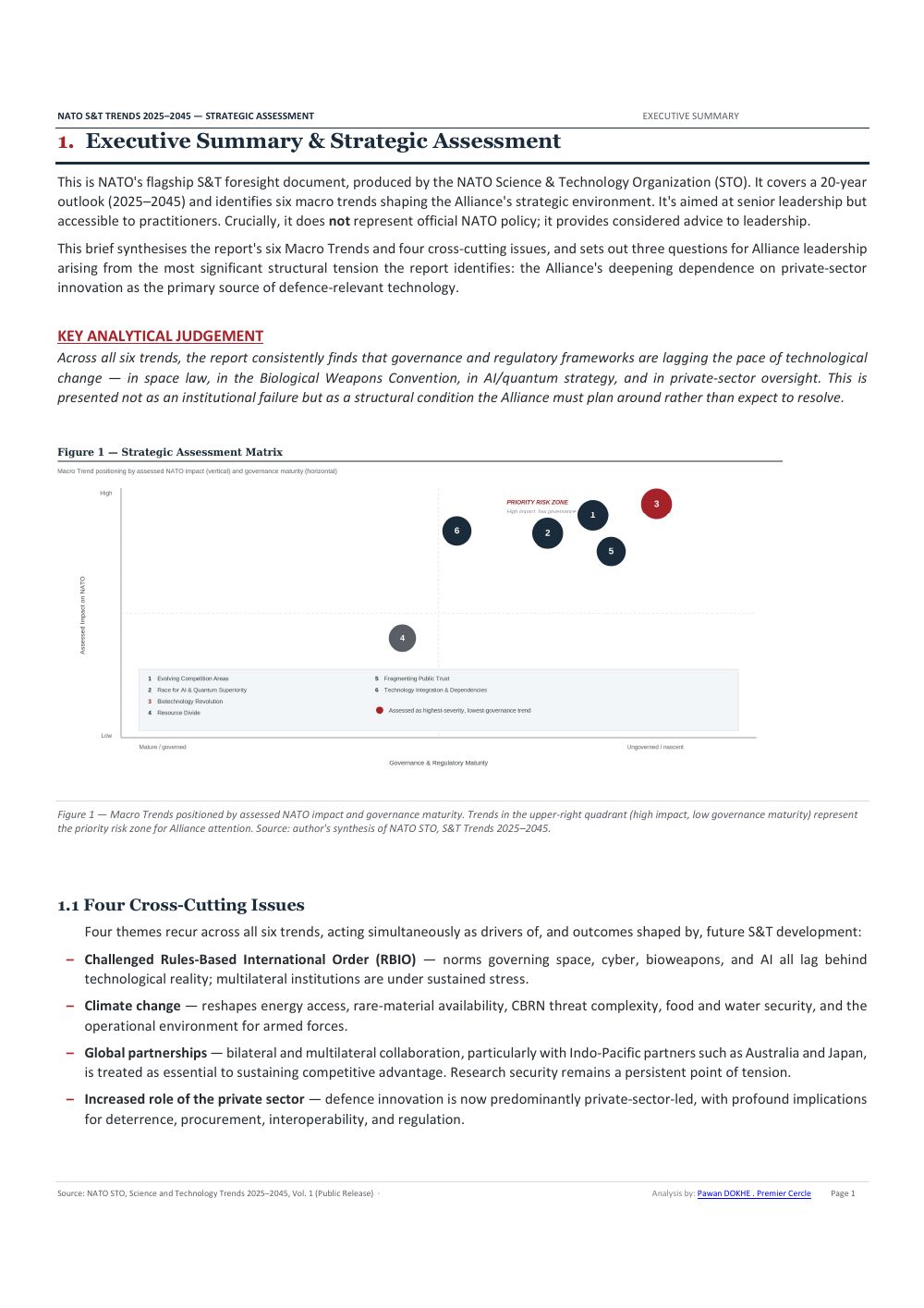
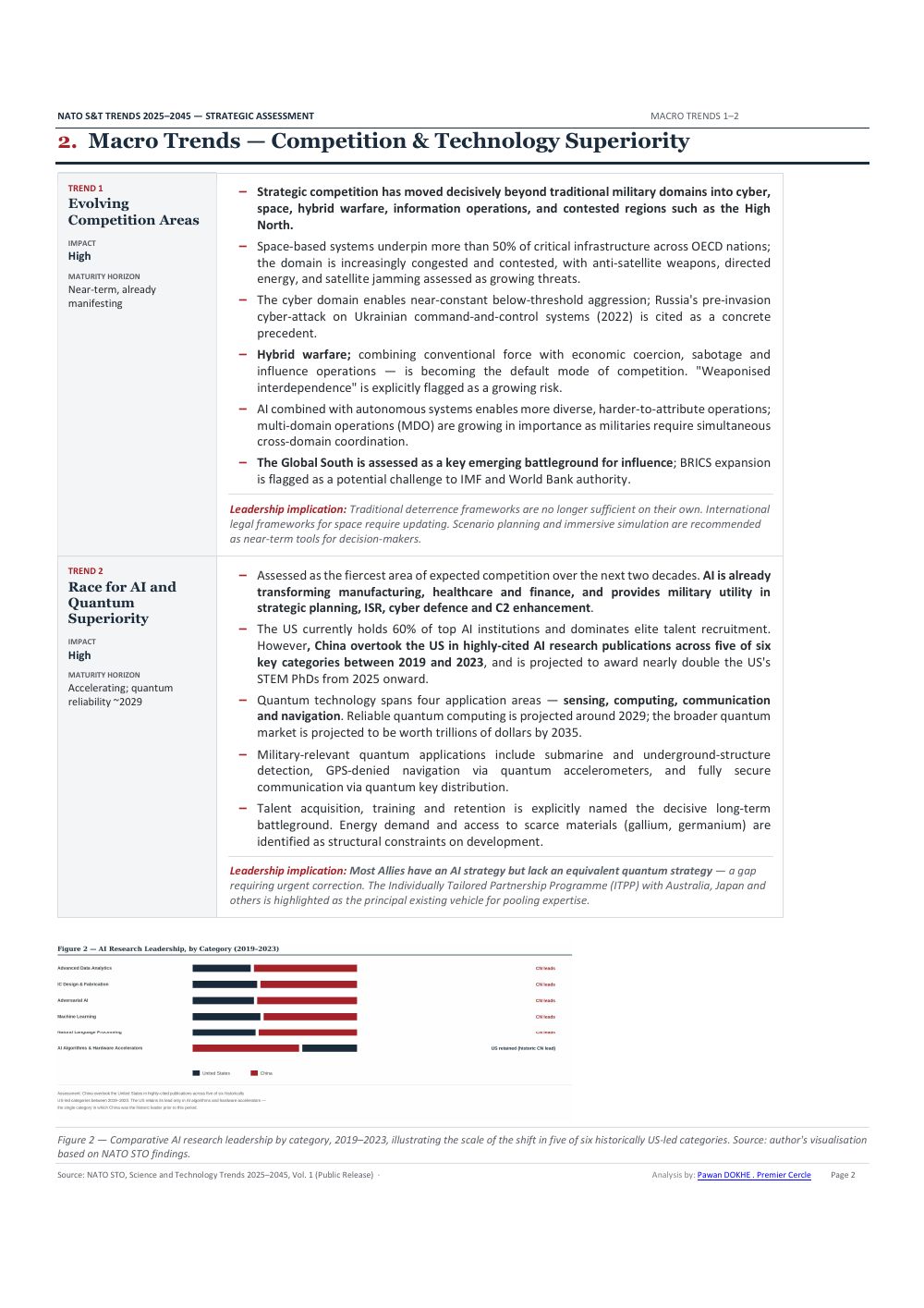
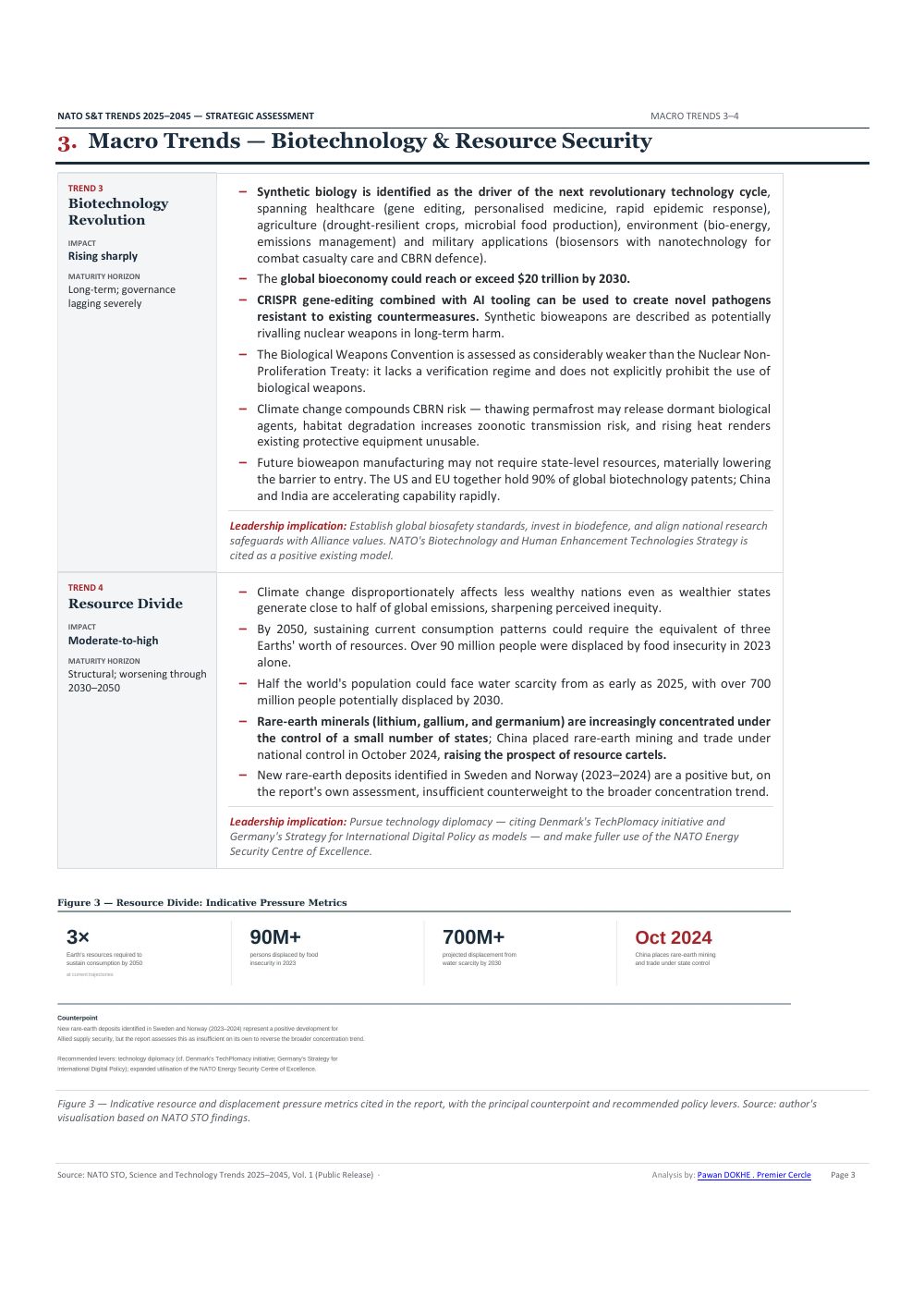
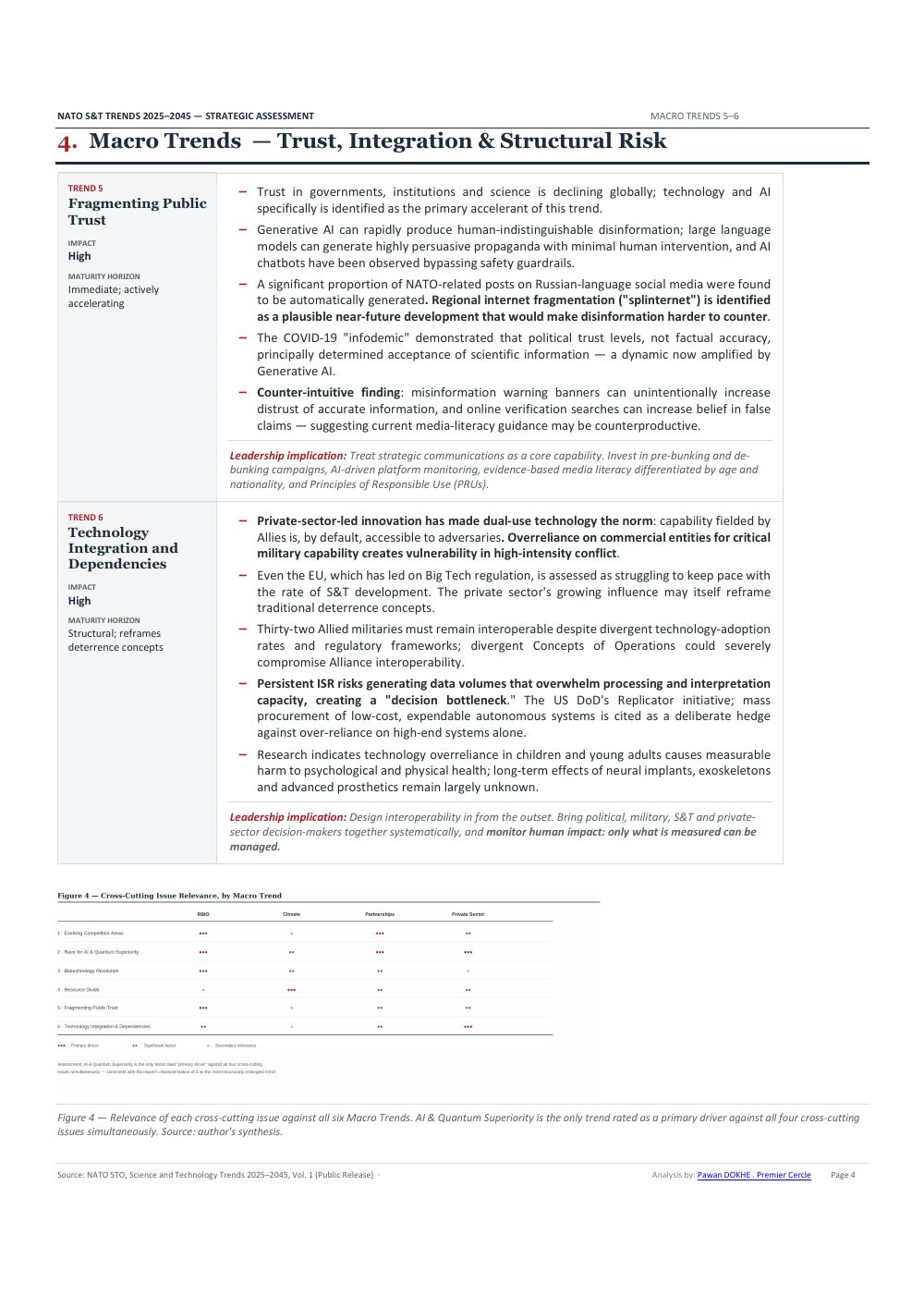
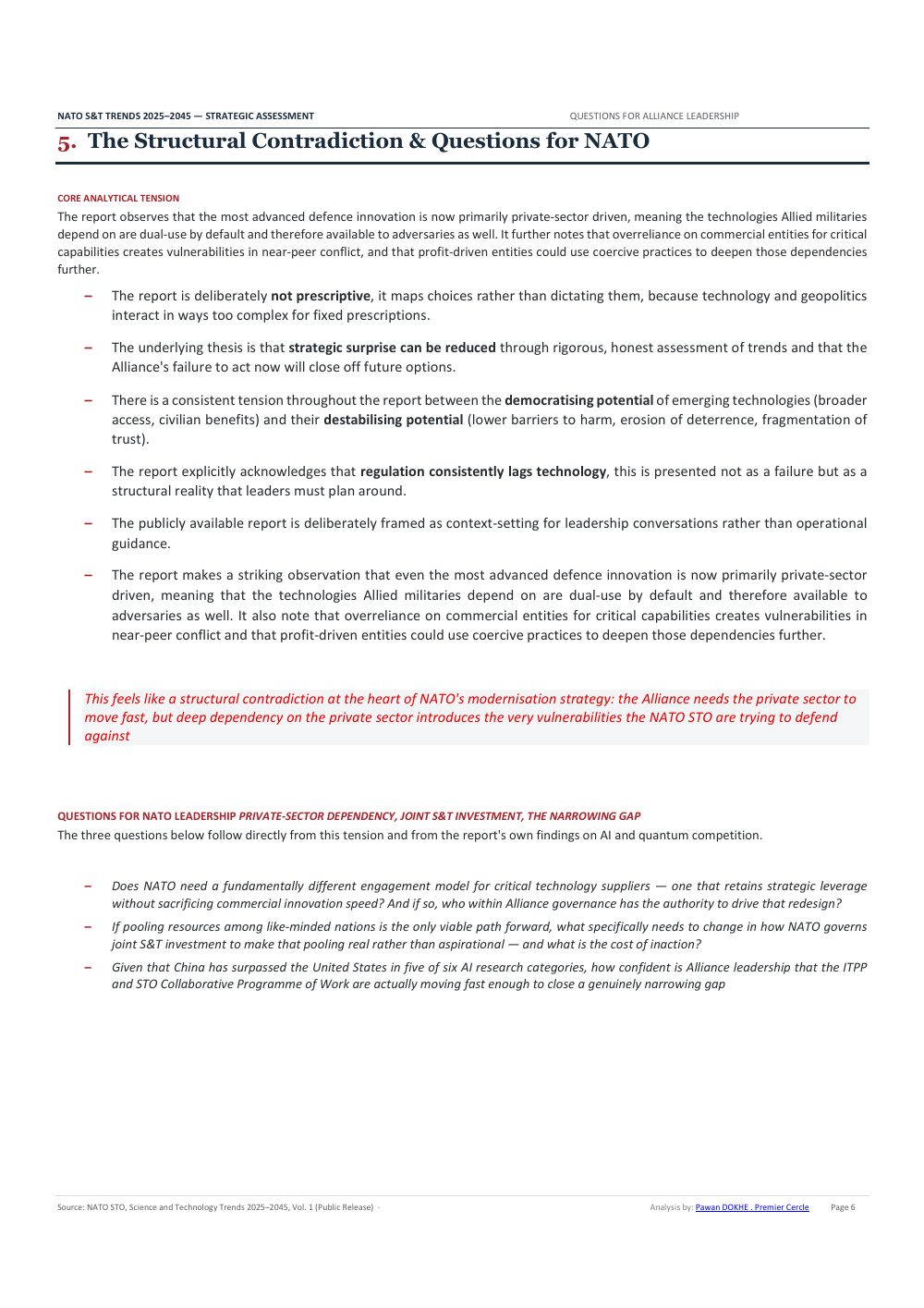
Across all six trends, the report consistently finds that governance and regulatory frameworks are lagging the pace of technological change: in space law, in the Biological Weapons Convention, in AI and quantum strategy, and in private-sector oversight. This is presented not as an institutional failure but as a structural condition the Alliance must plan around rather than expect to resolve.
Trend 1
Impact: high
Evolving Competition Areas
Near-term, already manifesting.
Trend 2
Impact: high
Race for AI and Quantum Superiority
Accelerating; quantum reliability around 2029.
Trend 3
Impact: rising sharply
Biotechnology Revolution
Long-term; governance lagging severely.
Trend 4
Impact: moderate-to-high
Resource Divide
Structural; worsening through 2030–2050.
Trend 5
Impact: high
Fragmenting Public Trust
Immediate; actively accelerating.
Trend 6
Impact: high
Technology Integration and Dependencies
Structural; reframes deterrence concepts.
- Challenged rules-based international order
- Climate change
- Global partnerships
- Increased role of the private sector
At the heart of NATO’s modernisation strategy: the Alliance needs the private sector to move fast, but deep dependency on the private sector introduces the very vulnerabilities NATO STO is trying to defend against.
- Does NATO need a fundamentally different engagement model for critical technology suppliers, one that retains strategic leverage without sacrificing commercial innovation speed? Who within Alliance governance has the authority to drive that redesign?
- If pooling resources among like-minded nations is the only viable path forward, what needs to change in how NATO governs joint S&T investment to make that pooling real rather than aspirational, and what is the cost of inaction?
- Given that China has surpassed the United States in five of six AI research categories, how confident is Alliance leadership that the ITPP and STO Collaborative Programme of Work are moving fast enough to close a genuinely narrowing gap?
Moderator’s note: the Chief Scientist’s responses consistently emphasise pooling of effort over duplication, open architecture over proprietary standards, and the cultivation of a sustained Allied technology base through close engagement with startups, SMEs and large industry. These themes align closely with the report’s repeated call, across all six macro trends, for like-minded nations to deepen collaborative S&T investment.
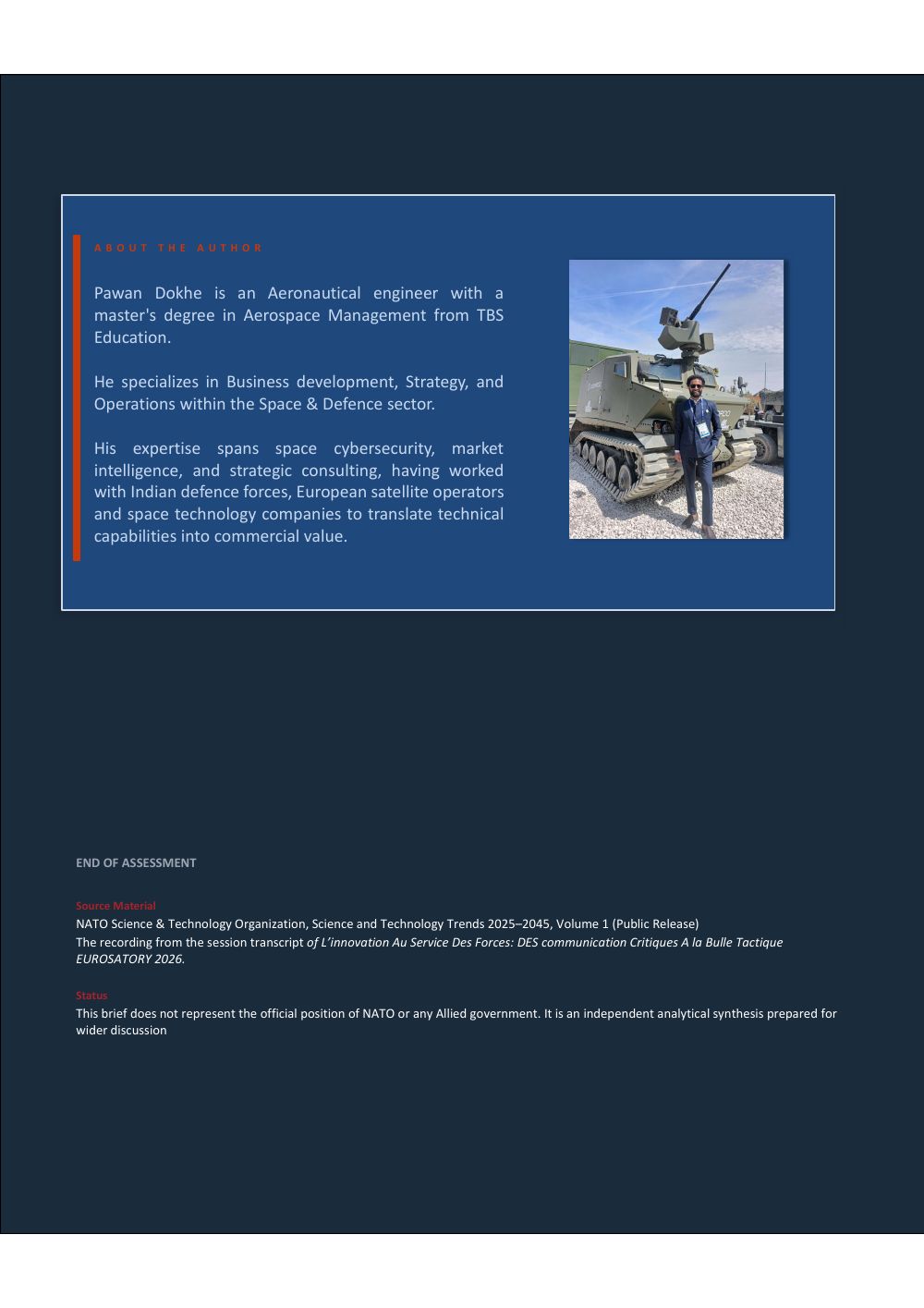
This brief does not represent the official position of NATO or any Allied government. It is an independent analytical synthesis prepared for wider discussion.
The Shorter Proceedings of the 2nd edition of the NATO Space CoE Conference 2026, Toulouse, France
By Pawan Dokhe, Premier Cercle, April 2026.
Covered the conference and wrote the proceedings in collaboration with the NATO Space CoE.
The conference, “Awareness to Action – Embedding Space in NATO Operations”, was held in Toulouse from 28 to 29 April 2026, with three panel discussions and six keynotes.
- Panel 1: Escalation Management and Effective Deterrence in Space
- Panel 2: Operationalizing Space in a Multi-Domain Context: Maximizing Effects Through Integration
- Panel 3: Integrating Capabilities in Space: Dual Use Solutions and Challenges
- Background on the NATO Space Centre of Excellence
- Views from the Conference
- In conversation with Colonel Sylvain Debarre, Director, NATO Space Centre of Excellence
- Key takeaway
The Alliance needs to categorise space behaviours more precisely: which are ambiguous, which are tolerable, and which cross a threshold requiring response. Until that taxonomy exists, deterrence remains a concept in search of operational content.
NATO’s commercial space strategy is to be commended for working towards a marketplace model, drawing from a diverse pool of vetted vendors to avoid long-term dependency on single suppliers.
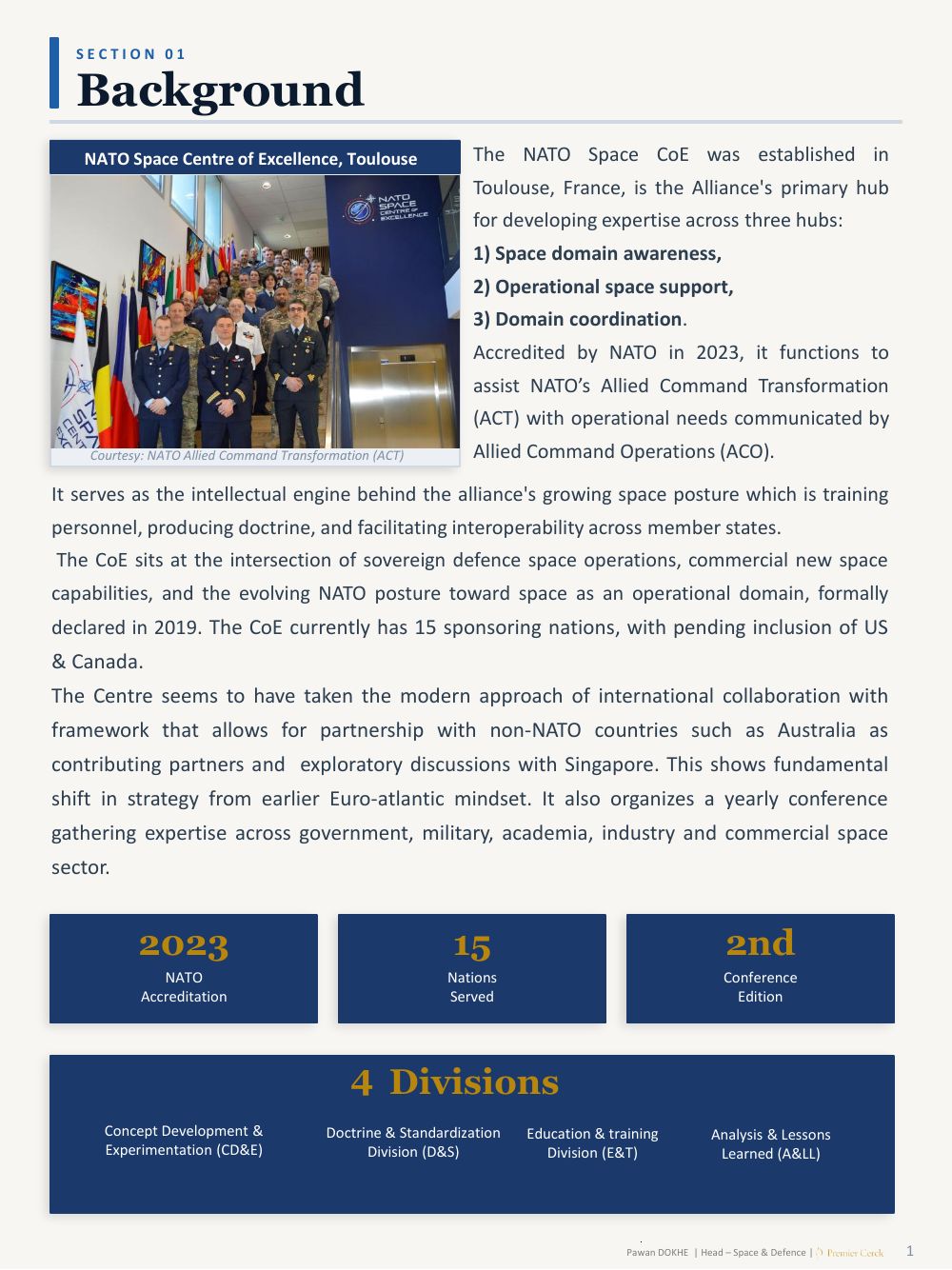
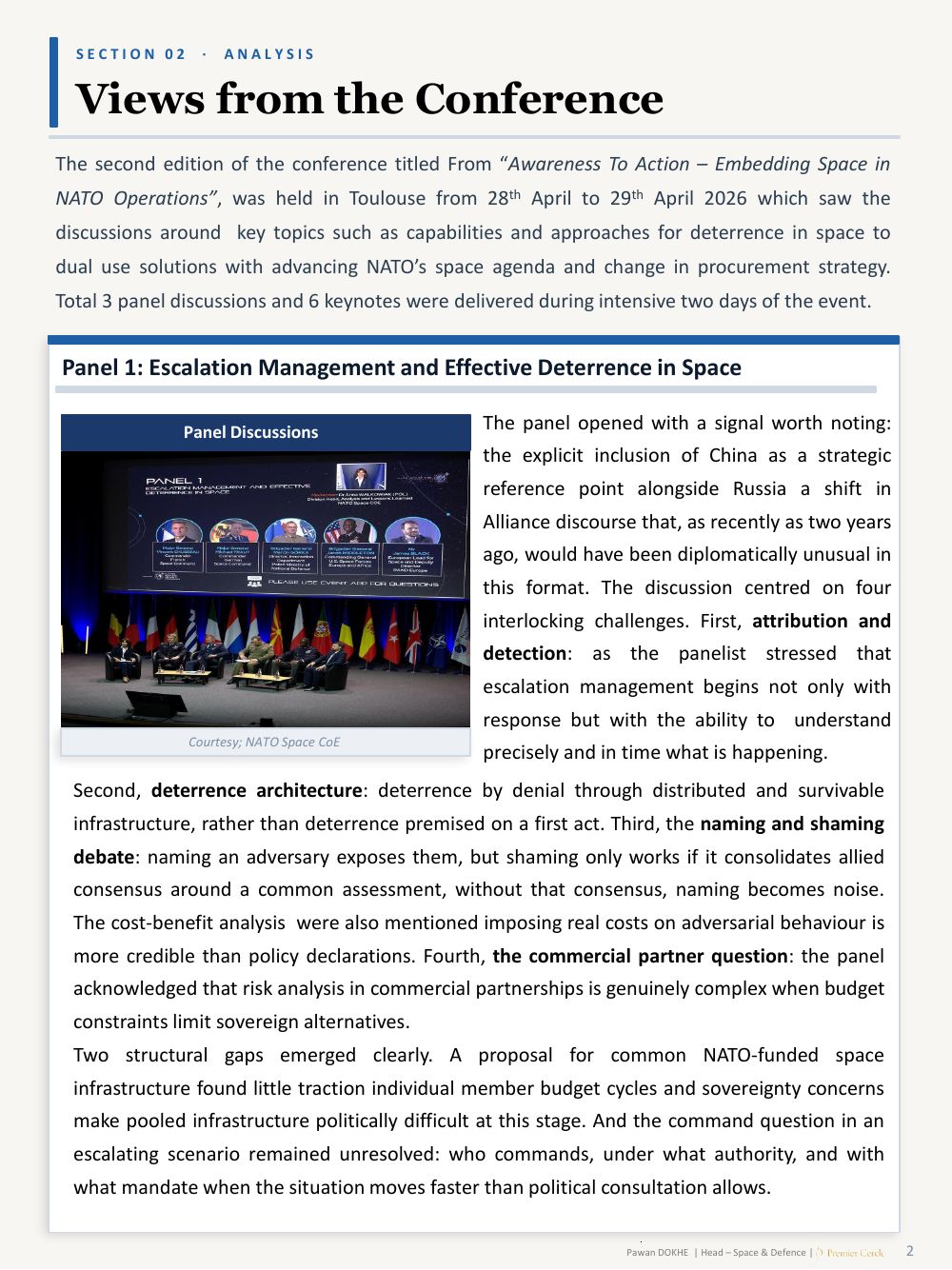
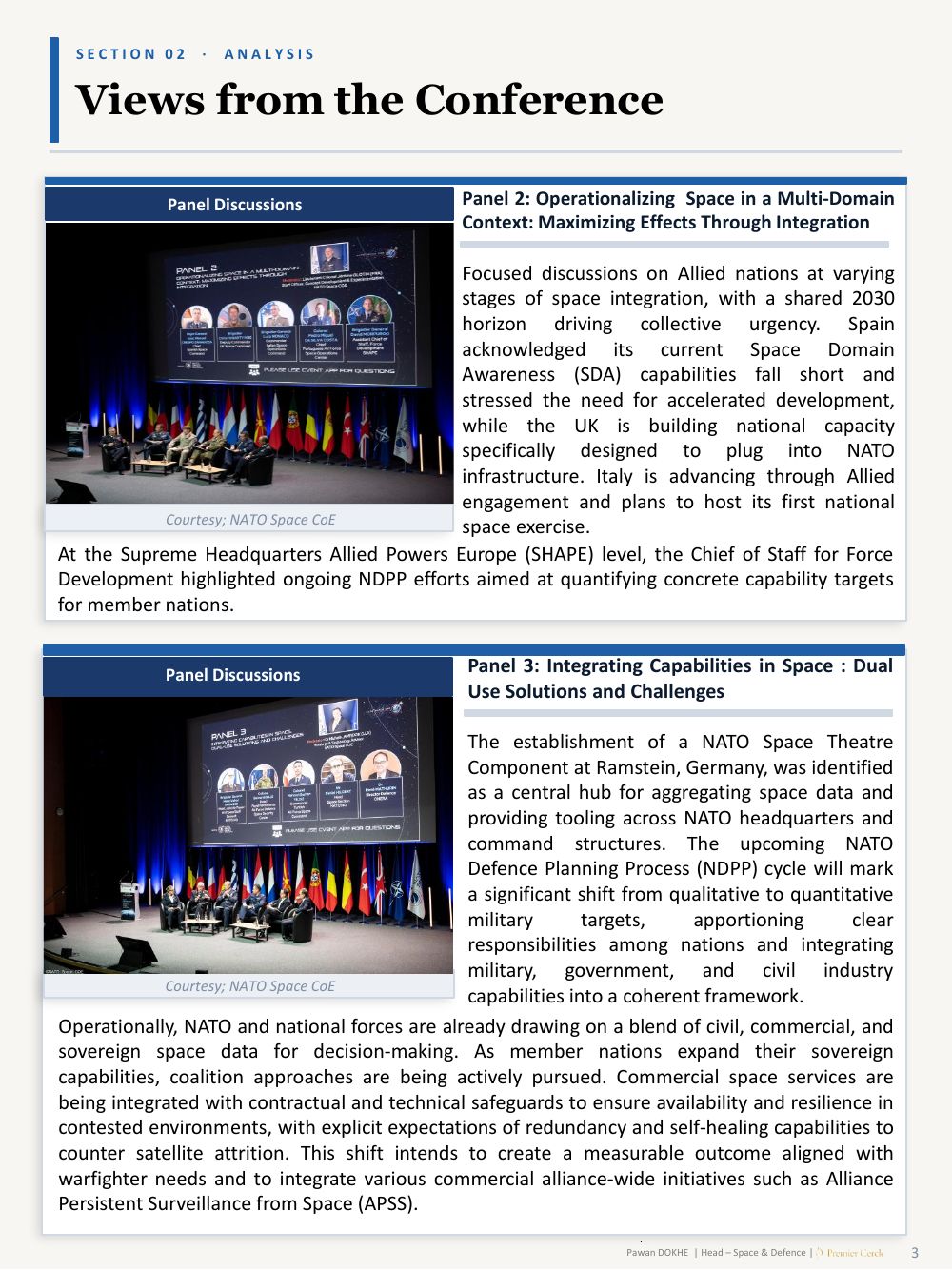
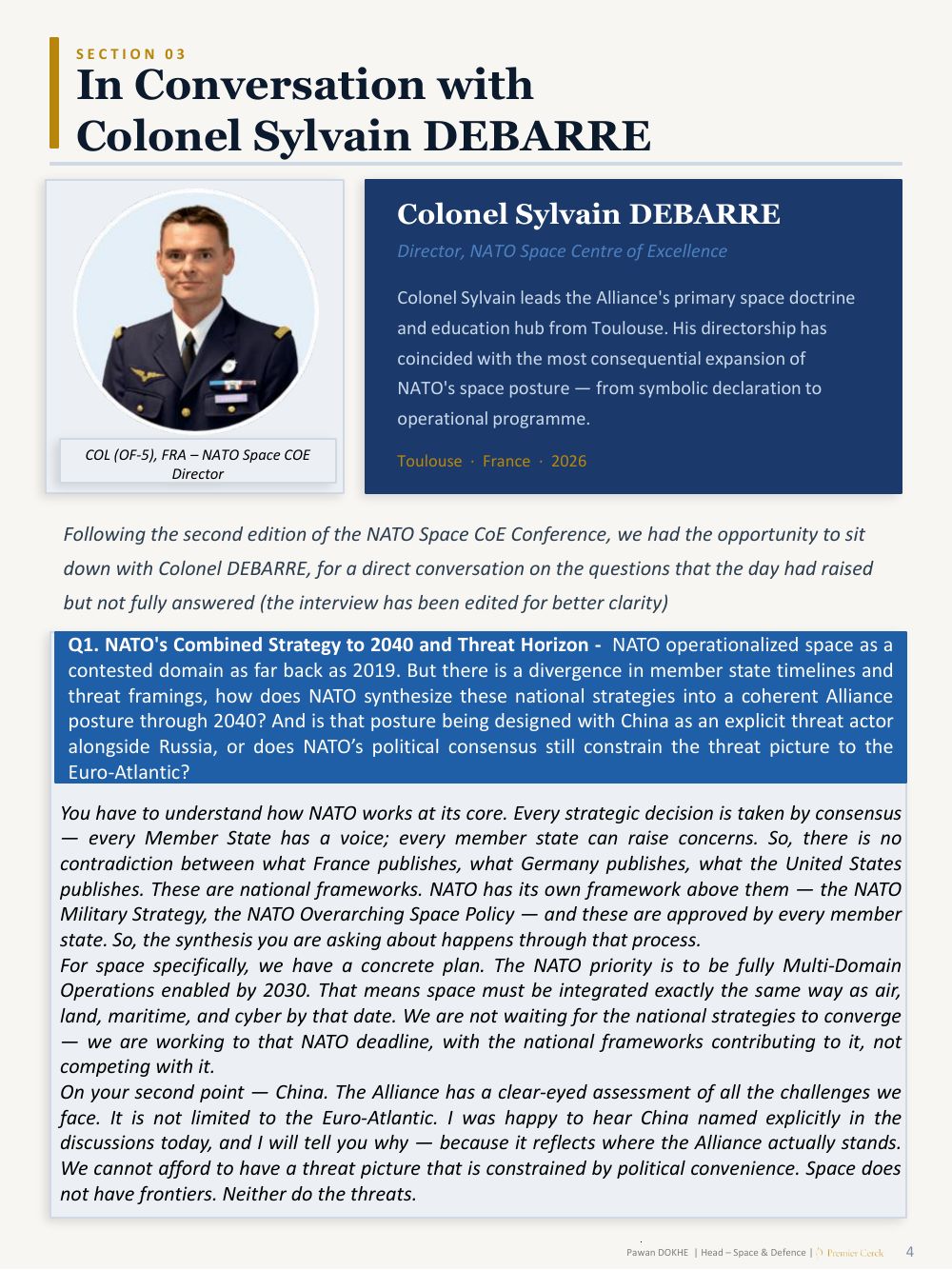
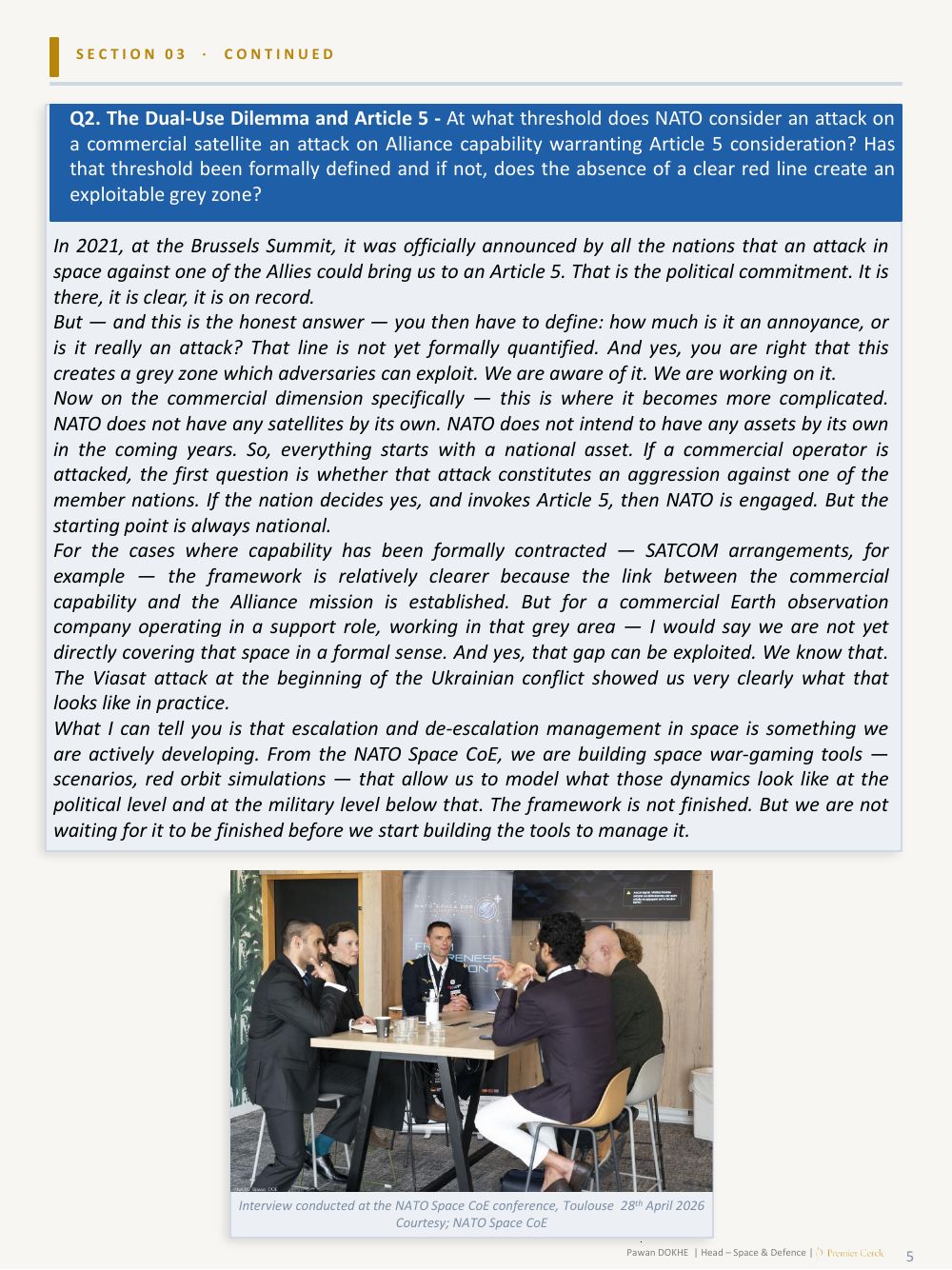
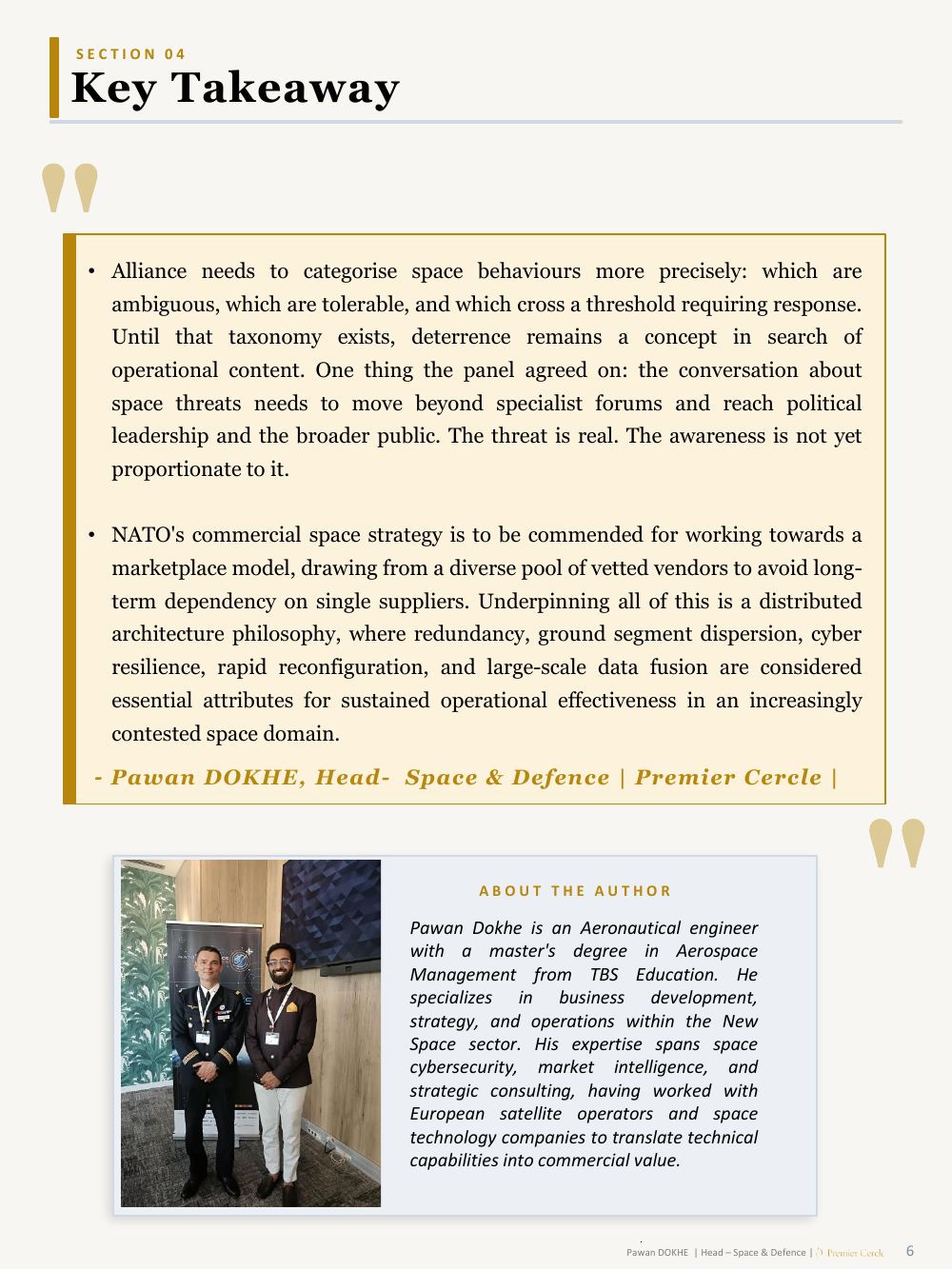
Photographs in the proceedings are courtesy of NATO Allied Command Transformation (ACT) and the NATO Space CoE.
Contact
Based in Toulouse, France.
Indian Space Cybersecurity Market Intelligence Report.
Copyright © 2023 CyberInflight - All rights reserved.